

Red Top Wellness Center’s Approach to Schizoaffective Disorder Treatment
Our team at Red Top Wellness Center delivers schizoaffective disorder treatment in a comfortable setting backed by clinical expertise. We’ll take the time to understand your full history and symptoms, so we can build a personalized treatment plan around your specific diagnosis.
Personalized Assessment
Because schizoaffective disorder combines features of both psychotic and mood disorders, an accurate diagnosis is one of the most important steps in effective treatment. Our team takes the time to carefully distinguish schizoaffective disorder from related conditions rather than assuming a diagnosis based on surface-level symptoms.
Schizoaffective Disorder vs. Schizophrenia vs. Bipolar Disorder: Know the Difference
Comprehensive Care
Schizoaffective disorder often occurs alongside other conditions, including substance use disorder, anxiety, or other co-occurring diagnoses. Treating only one piece of the picture rarely leads to lasting stability.
At Red Top Wellness Center, our program is built to treat dual diagnoses simultaneously, with psychiatric care, therapy, and medication management all coordinated under a single treatment plan. This integrated approach means patients aren’t shuffled between disconnected providers, and every part of their care is working toward the same outcome.


A Day in Residential Treatment for Schizoaffective Disorder
Residential treatment for schizoaffective disorder is structured around stability, safety, and steady progress. A typical day balances clinical care with the support you need to feel comfortable and understood throughout your stay.

Stabilization
The first priority in schizoaffective disorder treatment is stabilizing acute psychotic and mood symptoms in a safe environment. A residential level of care means you’ll be surrounded by 24/7 support, and our clinical team can respond quickly to any changes in your condition.
As symptoms come under control, we introduce psychotherapies, such as Cognitive Behavioral Therapy (CBT), to help you recognize the thought patterns connected to your symptoms and build practical strategies for managing distress. We’ll also help you build skills for day-to-day functioning, like communication and problem-solving, that psychotic or mood episodes can disrupt. Once we’ve stabilized your acute symptoms, our team works to reinforce these longer-term therapeutic tools so you leave treatment equipped for sustained recovery.
Medication Management
Many people with schizoaffective disorder benefit from antipsychotic or mood-stabilizing medication alongside therapy, because medication can help manage the biological symptoms of the condition.
Our medical team will monitor you closely throughout treatment, adjusting dosages and combinations as needed based on how you respond. Medication decisions are always made with a patient’s full therapeutic progress in mind, not in isolation from the rest of their care.
Family Involvement
Schizoaffective disorder affects loved ones as much as it affects the patient, so family involvement is a core part of our program. We offer family therapy sessions where loved ones can better understand the condition, ask questions, and learn how to recognize early warning signs of relapse.
We also provide educational resources that help families build healthier communication patterns and practical strategies for offering support once their loved one returns home, so recovery has a strong foundation to continue outside of residential care.
Holistic Therapies
Alongside clinical and medical care, we incorporate holistic therapies that go beyond the diagnosis and treat the whole person. Among the many holistic approaches we offer, red light therapy stands out for its effectiveness in supporting mood regulation. We also provide biosound therapy, which combines sound, vibration, and biofeedback to promote relaxation and reduce stress.
For people managing the emotional weight of both psychotic and mood symptoms, holistic therapies offer a calming complement to more structured clinical work. These approaches equip you with additional tools to regulate your mood and find moments of ease throughout treatment.

Experience the Red Top Wellness Center Difference
Choosing a program for schizoaffective disorder treatment is an important decision. At Red Top Wellness Center, we’re proud to offer treatment you can trust, backed by clinical staff with experience treating the mix of psychotic and mood symptoms that makes schizoaffective disorder particularly challenging.
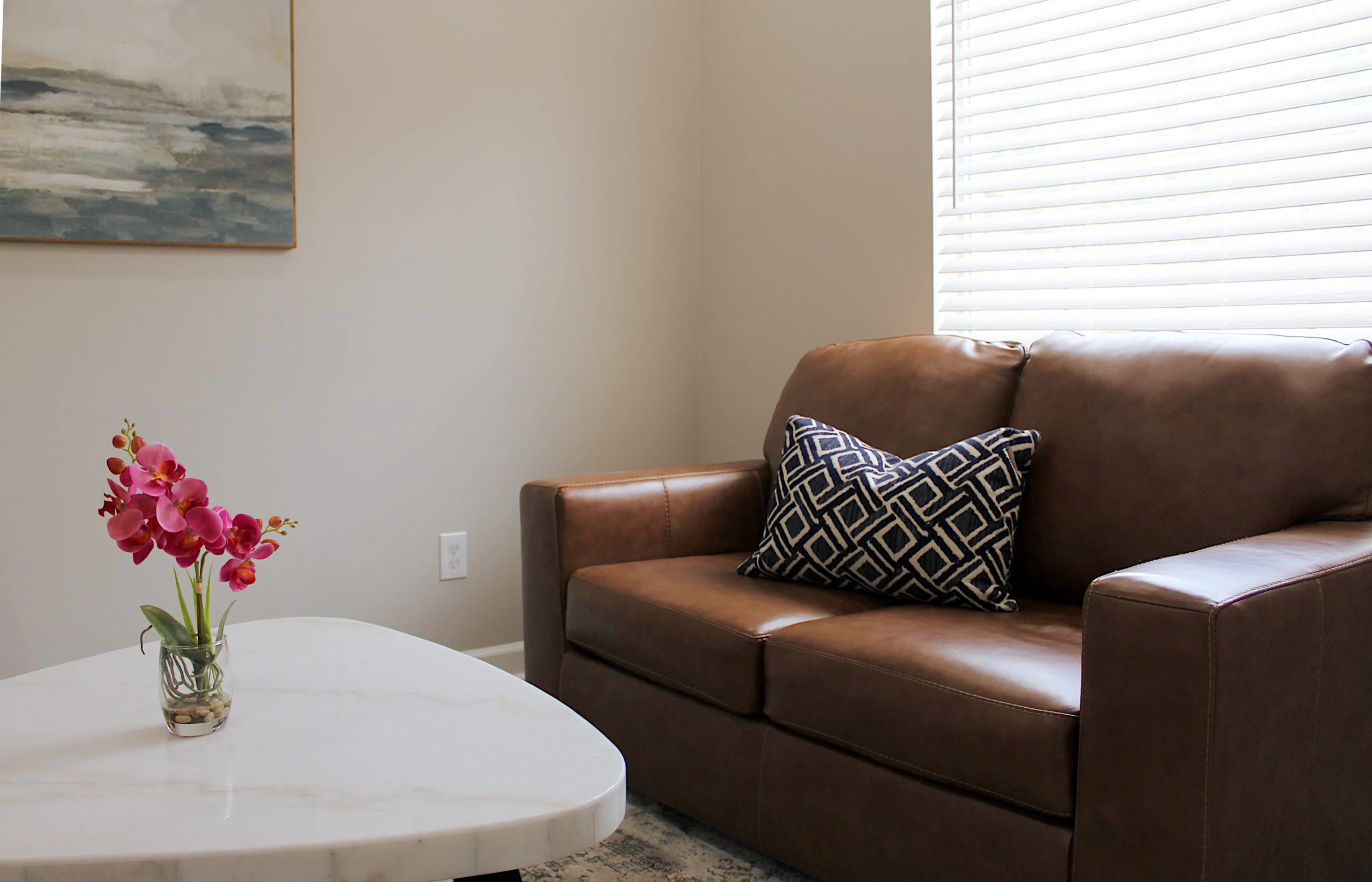
Our residential facility in Cartersville, Georgia, feels comfortable and welcoming. It’s not clinical or impersonal, and it’s designed to help you focus fully on recovery. We combine evidence-based therapies with medication management and holistic care., so that every part of your treatment plan works toward the same goal: complete recovery. This ensures continuity of care from admission to discharge and beyond.
When you choose Red Top Wellness Center, you choose a team that understands schizoaffective disorder. More importantly, you’re choosing a team that’s committed to understanding you. We’re invested in your long-term stability, not just your time in residential treatment.


