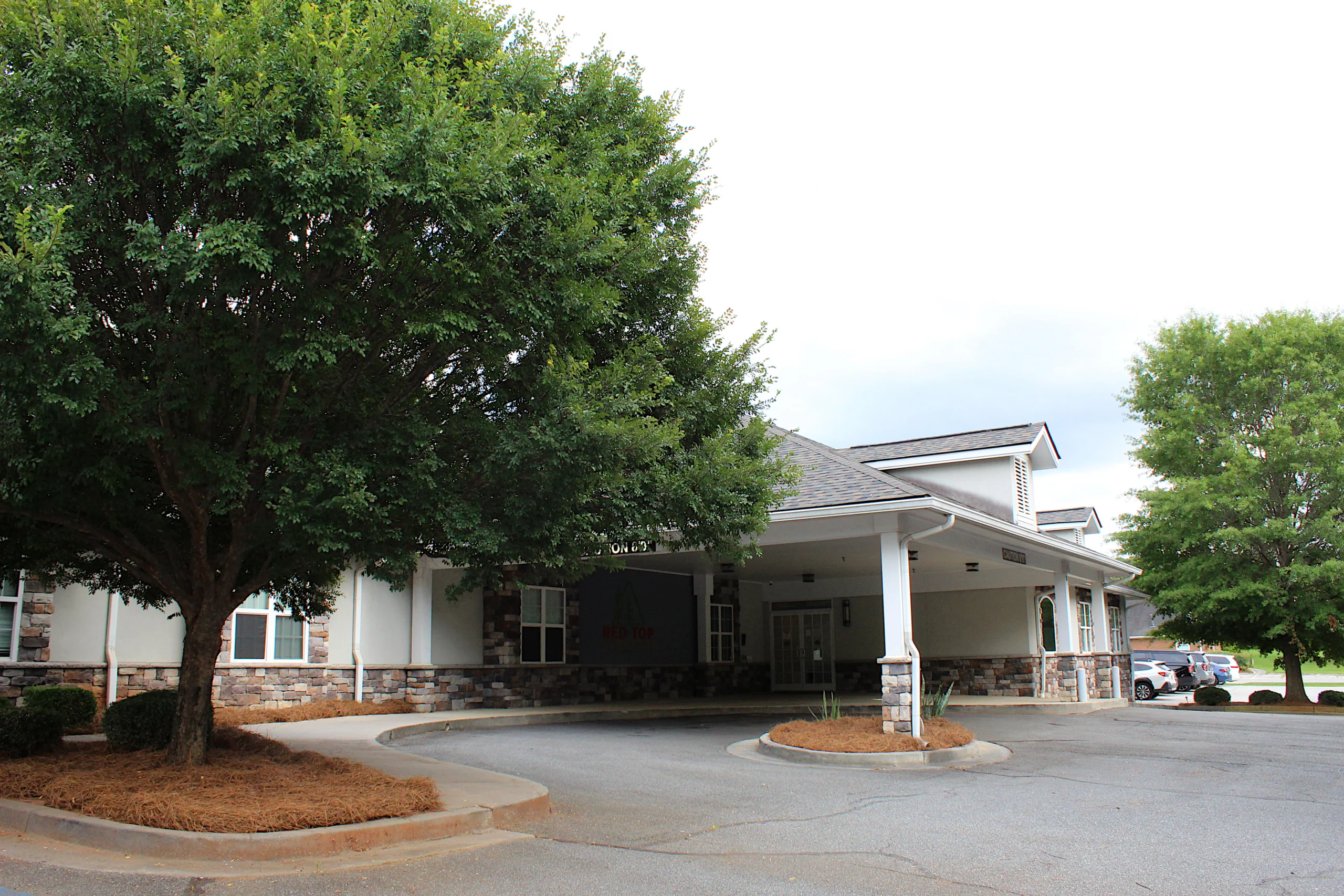
The exterior of Red Top Wellness Center, an inpatient mental health facility in Cartersville, Georgia.

Inpatient mental health facilities in Georgia provide 24/7 clinical care for people whose symptoms are too severe or destabilizing to manage through outpatient therapy alone. Red Top Wellness Center is a residential mental health facility in Cartersville, Georgia, offering structured care for adults dealing with a range of mental health conditions, including depression, anxiety, bipolar disorder, trauma, and co-occurring substance use.

To help you narrow down your options, this guide breaks down the logistics of residential treatment, how to evaluate a facility before you commit, and everything else you need to know to make a decision about your care.

If you’d prefer having a conversation with someone who can answer your questions about our residential program, call our team! We’re happy to walk you through your options over the phone.

What Is Residential Mental Health Treatment?

Residential, or inpatient, mental health treatment is a level of care in which the person receiving treatment lives at a licensed facility full-time while receiving daily therapy and psychiatric care, typically for 30 to 90 days. It’s designed for people who need more support than weekly therapy can provide but who are not in an acute medical crisis requiring a hospital bed. Common reasons someone enters residential treatment include:

  • Symptoms that have not improved after multiple rounds of outpatient therapy or medication changes
  • A recent hospitalization that requires a structured step-down before returning home
  • Co-occurring mental health and substance use disorders that need integrated, simultaneous treatment
  • A home or work environment that makes recovery difficult without physical distance and structure
  • A need for daily psychiatric monitoring while medications are adjusted
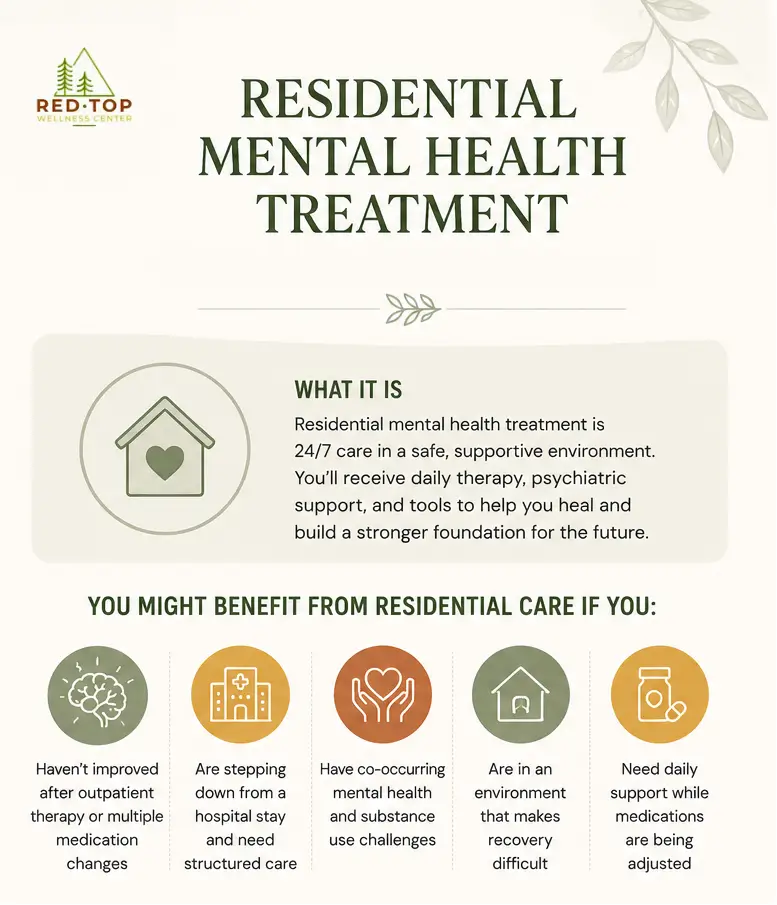
A summary of how residential treatment works at inpatient mental health facilities in Georgia.

A Typical Day in a Residential Mental Health Facility

A typical day in residential treatment includes individual therapy, group sessions, medication management, structured activities, and often family therapy sessions. The goal is stabilization and skill-building that carries over once the person returns to independent living.

While all inpatient mental health facilities in Georgia structure their schedules a little differently, a typical day generally looks something like this:

Other Levels of Care, Explained

Mental health treatment is organized into levels of care that range from 24-hour residential supervision down to a few hours of outpatient therapy per week. Most people move down through these levels as they stabilize rather than staying at one level throughout treatment.

Partial Hospitalization Program (PHP)

PHP provides hospital-level clinical intensity, roughly 5-6 hours a day, 5 days a week, without requiring an overnight stay. Participants either live at home, in a sober living arrangement, or in program-affiliated housing, but attend full-day treatment. PHP is often the step immediately after residential care, or an entry point for people who need daily structure without 24-hour supervision.

Intensive Outpatient Program (IOP)

IOP typically involves 9-12 hours of treatment per week, spread across 3-5 days, while the individual lives independently. In some cases, the treatment schedule is flexible enough for the individual to return to work or school. This level suits people who have stabilized enough to function day-to-day but still need regular therapeutic support and accountability.

Standard Outpatient Care

Standard outpatient care typically involves weekly or biweekly individual therapy and psychiatric medication management. This structure is best for people who are stable and using treatment for maintenance rather than crisis management. It can also be a valuable schedule post-treatment, helping people who have completed residential care sustain the progress they made in the program.

clipboard min 1

Signs An Inpatient Mental Health Facility May Be Right For You

Generally speaking, residential treatment is best for those who are experiencing symptoms that actively interfere with daily functioning. In some cases, people may visit a residential mental health facility after experiencing other levels of care. For example, inpatient treatment may be the next step for someone being discharged from a hospital, or for those who haven’t seen success with outpatient therapy.

If you’re wondering whether residential treatment is right for you, consider your answers to the following questions:

  • Have weekly therapy and medication management failed to produce meaningful improvement over several months?
  • Are you experiencing symptoms that make it difficult to work, maintain relationships, or manage basic daily responsibilities?
  • Are you experiencing a co-occurring substance use disorder that’s complicating mental health symptoms?
  • Is your home environment conducive to stabilization, or is it characterized by conflict, isolation, and ongoing triggers that reinforce your symptoms?

If one or more of these describe your situation, it’s worth talking with a clinician to find out whether residential care is the right starting point for you.

How to Choose Between Inpatient Mental Health Facilities in Georgia

The best inpatient mental health facilities in Georgia share four key characterizations: accreditation, staff credentials, specialization in specific conditions, and insurance acceptance. Facilities that are vague on any of these four points are worth a second look before you commit.

Accreditation is the clearest signal that a facility meets independent clinical and safety standards, rather than just self-reporting its own quality. Third-party confirmation of a facility’s adherence to clinical standards adds even more credibility, because it shows that multiple organizations agree the facility is in good standing.

Some essential qualifications to look for when comparing residential mental health facilities in Georgia include:

  • Georgia Department of Behavioral Health and Developmental Disabilities (DBHDD): Licensing through DBHDD is a state-level requirement licensing. Every legally operating residential facility in Georgia should hold this license, and you can verify it directly with the state.
  • The Joint Commission: The Joint Commission is a third-party organization that checks a facility against national standards for safety, staffing, and treatment quality. Ongoing surveys are required to maintain that status.
  • Psychology Today: Psychology Today is a third-party organization that checks to ensure a facility’s license or accreditation is up to date and in good standing. Being verified by Psychology Today is a good signal that a facility takes its credibility seriously, and that it keeps its information up-to-date for those who need it.

Keep in mind that accreditation is state-specific, meaning that inpatient mental health facilities in Georgia will follow regulations set at the state level. For more specific insight into an organization’s credibility, third-party organizations may provide further detail.

Staff-to-patient ratio, psychiatric coverage, and the licensure of the therapists running your groups all directly affect the quality of care you’ll receive. Ask specifically:

  • Is a psychiatrist or psychiatric nurse practitioner on staff, and how often will you see them?
  • Are individual therapy sessions run by licensed clinicians (MD, LCSW, RN, PMHNP-BC, APRN, FNP), or by unlicensed staff?
  • What is the staff-to-patient ratio during the day and overnight?
  • Is medical staff (RN or higher) on-site 24/7, or on-call only?

Not every residential program treats every diagnosis, and mismatched placement can lead to ineffective treatment. Before choosing a residential mental health facility, confirm they have specific clinical experience with your (or your loved one’s) primary condition. This matters most for:

  • Bipolar disorder, which requires psychiatric management alongside therapy
  • A dual diagnosis, which requires staff trained in treating both sides of the co-occurring condition
  • Trauma and PTSD, which require trauma-informed modalities, such as EMDR and holistic support
  • Personality disorders, which often require DBT-trained clinicians

The best inpatient mental health facilities in Georgia are experienced in a wide array of conditions rather than specializing in any specific diagnoses. You wouldn’t want to receive treatment for anxiety, for example, from a facility that specializes in personality disorders. If a facility overemphasizes just one condition, it may be a good sign that their expertise is limited.

A facility that won’t verify your insurance benefits before you arrive, or that gives only vague cost estimates, is a red flag. Reputable programs will run a free, no-obligation insurance verification and tell you plainly what your plan is likely to cover, as well as what your out-of-pocket costs might look like.

What Makes Us Different at Red Top Wellness Center in Cartersville, Georgia

Red Top Wellness Center is an inpatient mental health facility in Cartersville, Georgia, dedicated to meeting each person where they’re at through clinically-sound and personalized care. We’re experienced in treating a range of mental health conditions, and we apply this expertise to care plans that are completely tailored to the individual.

Joint Commision Quality Approved Seal
verified by Psychology Today 1
IMG 5760 scaled

How We Treat

Our therapists will work with you one-on-one through evidence-based therapies and holistic techniques for a well-rounded approach to addressing your symptoms. In addition to individual therapies, we offer group and family therapy sessions, where you can learn to manage symptoms alongside peers facing similar challenges or loved ones who serve as your support network outside of our facility.

Unlike urban facilities throughout the greater Atlanta area, our location in Cartersville, Georgia, offers a quieter environment removed from daily triggers. This residential setting is meant to be truly relaxing, which is helpful for the early, most vulnerable weeks of stabilization.

Anxiety

Our residential anxiety treatment program helps people overcome anxiety disorders by combining proven therapies with individualized care.

Bipolar Disorder

Our residential bipolar disorder treatment program helps people find greater stability through ongoing therapeutic support.

Depression

Our residential depression treatment programuses evidence-based therapies to help individuals rediscover hope and improve their quality of life.

Dual Diagnosis

Our dual diagnosis treatment treatment program addresses mental health that occur together or with substance use disorders for lasting recovery.

Post-Traumatic Stress Disorder (PTSD)

Our residential PTSD treatment program helps individuals recover from trauma in a safe and supportive environment.

Schizophrenia

Our residential schizophrenia treatment program helps people manage symptoms and build independence to support functioning in the real world.

No-Obligation Insurance Verification

We accept most out-of-network insurance coverage, and many people visit our facility at little-to-no out-of-pocket cost.

Rather than guessing at what your plan covers or delaying care while you sort it out, Red Top Wellness Center offers free, confidential insurance verification. All you have to do is call our team and provide your insurance plan details, and we’ll contact the insurance provider directly to find out what’s covered. You’ll receive a clear breakdown of your coverage, estimated costs, and any prior authorization requirements before you decide anything.

Our Admissions Process

If you’re ready to take the first step toward healing by visiting an inpatient mental health facility in Georgia, Red Top Wellness Center may be the perfect fit for you. Our admissions process is designed to be straightforward from first contact to arrival:

Frequently Asked Questions

If you or someone you love is dealing with a mental health condition that hasn’t improved with outpatient care, residential treatment may be the right next step. The two most useful things to do right now are to verify your insurance benefits and to talk to a clinician about whether residential care is the appropriate level for your situation.


Yes, inpatient mental health facilities in Georgia commonly accept clients from other states. Some clients specifically choose treatment outside their home state for the distance from familiar triggers and environments. Out-of-state insurance will need to be verified for coverage before admission.

Most residential, or long-term mental health facilities, offer programs that last 30 to 90 days, though the exact length depends on many factors. For example, Red Top Wellness Center’s program typically lasts 30 days. However, your diagnosis, the severity of your symptoms, and your progress throughout treatment may also play a role. Some people stabilize faster while others, particularly those with co-occurring conditions, may need a longer residential stay.

Yes. Georgia’s Mental Health Parity Act (HB 1013), passed in 2022, requires public and private insurers to cover mental health and substance abuse equally with physical healthcare. Enforcement has been uneven, though legislators have introduced follow-up bills to close reporting gaps. In practice, that means the strongest protection is still confirming your specific plan’s actual behavioral health benefits before admission, rather than assuming parity guarantees full coverage.

Georgia Medicaid covers a variety of medically necessary behavioral health services. However, long-term residential mental health treatment is generally not covered under Georgia Medicaid for adults, and coverage for residential levels of care is subject to specific eligibility and medical necessity requirements.

Because coverage varies by plan and individual circumstances, it’s important to verify your benefits before seeking treatment. Red Top Wellness Center does not participate with Georgia Medicaid plans, but if you have private insurance, our admissions team can verify your benefits and explain your coverage options.

There is no single “best” facility for everyone. The right one depends on your diagnosis, insurance, required level of care, and whether the facility has specific clinical experience with your condition. The evaluation criteria that matter most are accreditation status, staff credentials and ratios, documented experience with your specific diagnosis, and transparency around cost and insurance.

At Red Top Wellness Center, we’re committed to helping you find the perfect fit for your treatment, even if that means going somewhere else. When you call our team, we’ll be happy to talk through your needs and determine whether our program is right for you. If it is, we’ll make it as easy as possible for you to get started. And if it’s not, we’ll direct you to the resources that can help you find the care you need.