For many people, life with bipolar disorder can be summed up in one word: unpredictable. One week, you’re on top of the world, and the next, you feel lower than ever. The episodes themselves can feel unpredictable, too. While you may think an occasional boost of energy or confidence is normal, your loved ones are waiting for the other shoe to drop.
A bipolar manic episode doesn’t always feel dangerous, but it can lead to impaired judgement and impulsive behaviors that you’ll have to deal with after the heightened energy passes. The good news is that you can recognize a manic episode early, if you know what to look for.
Familiarizing yourself with the signs and stages of a bipolar manic episode can help you respond more effectively before the next one arises. This guide explains what to watch out for, how to lessen a manic episode’s severity, and how your loved ones can best support you through one.
FAQs About a Bipolar Manic Episode
To get started, let’s answer the most commonly asked questions about what to expect from a bipolar manic episode.
What Is a Bipolar Manic Episode?
A bipolar manic episode is a period of abnormally elevated mood paired with a significant increase in energy or activity. These episodes can cause significant problems at work, at home, or in relationships. In some cases, they can also lead to psychosis, which is a mental state that’s disconnected from reality.
Manic episodes are the defining feature of bipolar I disorder, and serve as a key difference between BPD and bipolar disorder.
How Long Does a Manic Episode Last?
By definition, a manic episode lasts at least seven days, unless hospitalization is needed sooner. Without treatment, episodes can last several weeks or even stretch over the course of a few months.
With treatment, symptoms often begin to ease within days to weeks, though full recovery can take longer. Some people move into a depressive episode after mania ends, which is why professional mental health care is typically needed.
What Does a Manic Episode Look Like On The Outside?
Mania can look different from person to person, but there are a few external changes that loved ones or clinicians may recognize when someone is experiencing an episode. On the outside, a bipolar manic episode can look like:
- An unusually elevated or irritable mood: Some people experiencing a bipolar manic episode may seem euphoric or giddy, even if their circumstances don’t warrant it. For others, mania causes irritability, with a short fuse and frequent conflict.
- Decreased need for sleep: One of the most telling signs of a manic episode is appearing highly energetic despite getting just a few hours of sleep. The person may sleep two or three hours and feel fully rested, sometimes for days in a row.
- Rapid speech: During a manic episode, a person’s speech may become fast, loud, and hard to interrupt. The person may talk over others, jump into conversations with strangers, or keep talking even when no one is responding.
- Racing thoughts: A bipolar manic episode can cause thoughts to move so quickly that the person skips from one topic to the next, sometimes with only a loose connection between them. Others may find it hard to follow the conversation.
- Inflated self-esteem: The person may believe they have special talents or insights. This belief can range from unrealistic confidence about a business plan to fixed beliefs about having a special mission or powers.
- Being easily distracted: Small, unrelated details can pull the person’s attention away from the task at hand. This can cause them to start many projects but only finish a few of them.
- A surge in activity or restlessness: Many people in a manic episode take on a flurry of goals at once, such as reorganizing the house at 3 a.m. or filling every hour with plans. Others show physical restlessness, like pacing or being unable to sit still.
- Risky or impulsive decisions: Mania often causes impaired judgment. Common examples include making large or unplanned purchases, risky investments, driving recklessly, or heavily using alcohol or drugs.
- Psychosis: In severe mania, some people lose touch with reality. They may experience delusions, such as believing they’re being targeted, or hallucinations, such as hearing voices. Psychosis during mania requires prompt medical care.
What Does a Manic Episode Feel Like To The Person Experiencing It?
From the inside, a bipolar manic episode can feel good at first. One study analyzed patients’ subjective experiences of their manic episodes, and reported that subjects felt:
- Free (or “alive, without any hindrance”)
- Excited and unable to sleep
- Creative and full of new ideas
- Extremely self-confident
- Able to take risks with no fear of danger
- Highly sociable
- More intelligent than others
However, the overall feeling of wellbeing can shift as the episode builds. In the study mentioned above, patients reported feeling exhausted, out of control, and careless. Ultimately, this led to feeling uneasy, nervous, and stressed.
Because mania can feel positive at first, the person may not see it as a problem. That’s why family members and friends often play a large role in recognizing an episode and encouraging the person to seek care.
Are Bipolar Manic Episode Triggers Avoidable?
Manic episodes are generally just a natural part of living with bipolar disorder. However, knowing your personal triggers gives you (and your clinical team) the opportunity to plan ahead and respond early.
According to Cleveland Clinic, several factors can contribute to the onset of a manic episode:
- Sleep disruption or inconsistency
- Major life changes, whether positive or negative
- Addictive substance use, or side effects from prescribed medications
- Increased stress levels
- Experiencing trauma
It’s important to note that the above list isn’t exhaustive, and triggers can look different for everyone. Identifying yours can help you avoid them or minimize the impact they have on your mental wellbeing. For example, if you know that a lack of sleep is one of your triggers, you may be diligent about getting to bed on time and do what you can to ensure you sleep well.
8 Signs of a Manic Episode to Look Out For
As a manic episode builds, recognizing the earliest signs can help you proactively address these feelings so they don’t get out of control.
The signs below can help you recognize an episode in yourself or in someone you love. Keep in mind that noticing one sign alone doesn’t mean someone is experiencing a manic episode.
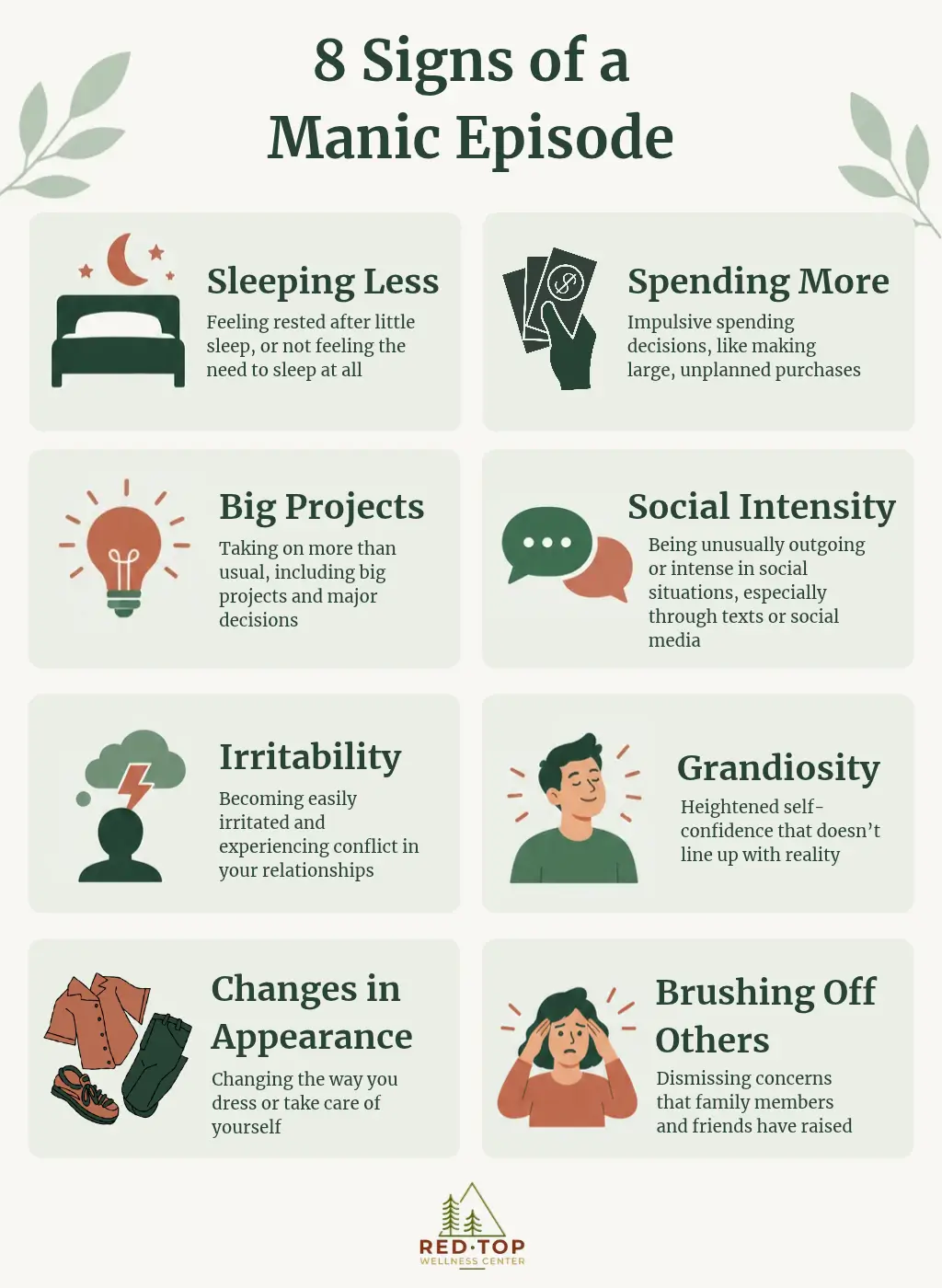
1. Sleeping Less Without Feeling Tired
One of the first signs of a bipolar manic episode is feeling like you need less sleep. Have you been going to bed later each night, or waking up earlier every morning? If you’re getting less sleep, do you still feel energized throughout the day?
You may trick yourself into believing that your lack of sleep is normal or justified. Perhaps you’ve been:
- Staying up late to work on special projects or clean
- Waking up after three or four hours and feeling fully rested
- Seeing sleep as a waste of time
Because a lack of sleep can also trigger or intensify a manic episode, this sign can end up feeding itself. If you recognize this sign in yourself, take steps to improve your sleep schedule. You may stick to a stricter bed time, purchase blackout curtains to make your bedroom as dark as possible, and cut out screen time before going to sleep.
2. Sudden Changes in Spending
One of the telltale signs of a manic episode is impulsive behavior, and this symptom shows up especially in spending. Your financial judgement can slip before other symptoms become obvious to friends or family.
Changes in spending to look out for include:
- Large, unplanned purchases, such as buying a car or planning a luxurious trip
- Multiple smaller purchases that add up quickly
- Risky investments, gambling, or giving away money or possessions
- Opening new credit cards or taking out loans
Many people experiencing bipolar disorder set up safeguards with a trusted person during stable periods. For example, consider asking a parent or spouse to help you adhere to daily spending limits, or set up your bank account to require their approval before processing large purchases.
3. A Burst of New Projects and Plans
When a manic episode starts to emerge, you may suddenly take on far more than usual. Your ideas can feel brilliant and urgent, and there never seems to be enough time to act on them all.
Consider whether you’ve:
- Started several projects at once and finished few of them
- Made major decisions, like quitting a job or launching a business, with little planning
- Grown impatient when others don’t share your excitement
Productivity on its own isn’t a concern, but this behavior can be dangerous when it’s starkly different from your usual pace, especially while you’re getting less sleep.
Accountability is the key to protecting you from yourself when you notice this warning sign. Rely on trusted family members or friends to encourage you to think through these projects as they come up.
For example, let’s say you decide to rearrange the furniture in your house in the middle of the night. Your spouse should be prepared to help you pivot, perhaps by asking you to draw up a layout for the furniture arrangement first or spend some time looking for inspiration on Pinterest. As you shift your focus to planning mode, the intensity of your feelings may subside.
4. More Talkative and Socially Intense
During a bipolar manic episode, the way you connect with others may change. You might seem unusually outgoing, charming, or intense, and conversations can start to feel one-sided. Friends often notice this sign first, especially through texts and social media activity.
Here are some social behaviors to look out for:
- Talking quickly and loudly and being hard to interrupt
- Calling or texting people at odd hours
- Suddenly reconnecting with old friends or former partners
- Oversharing with strangers or posting often on social media
- Sending long messages that jump between topics
When a loved one points out this behavior to you, set up boundaries for yourself that add structure to your social life. For example, use the settings on your phone to block yourself from using social media or messaging apps during a certain timeframe. Ask a loved one to discourage you from socially intense behaviors by attending events with you or reminding you not to reach out to people at odd hours.
5. Irritability and a Short Temper
While manic episodes can feel euphoric, many people experience irritability, restlessness, and conflict. At the beginning of a manic episode, you may notice the following signs in yourself or a loved one:
- Snapping at small frustrations or delays
- Arguing when others question a plan or idea
- Feeling that everyone else is moving too slowly
- Pacing or being unable to sit still
The solution to this symptom is highly personal, because what calms one person’s irritability might not work for another. Find self-soothing techniques that help you decompress when you’re irritated and set up daily reminders for yourself to practice them.
6. Grandiose Confidence
A healthy level of self-confidence is normal, but confidence that doesn’t match reality can be a warning sign of an oncoming manic episode. At the severe end, grandiose ideas can become fixed beliefs that evidence won’t change.
This may look like:
- Unrealistic plans, such as expecting overnight fame or wealth
- Dismissing risks that would usually worry you
- Believing you have a special mission or connection
- Taking on roles far outside your experience or training
Because these ideas can be difficult to see past on your own, the best way to calm them is to ask a loved one to help keep you grounded. Extreme cases of grandiosity can signal psychosis, and this calls for prompt medical care.
7. Changes in Appearance
Changes in your outward presentation, particularly your appearance, can signal a rising manic episode. For example, you might dress more boldly or brightly than usual. Or, you could experience uncharacteristic changes in your self-care routines and hygiene.
Your response to this sign of a manic episode depends on the severity of your experience. Wearing neon-colored clothing, for instance, is harmless, but neglecting your personal hygiene is a symptom that needs to be addressed.
Changes in appearance are more commonly a long-term issue, meaning you need to recognize this as a sign to prepare for the manic episode itself. Once you’ve recognized this warning sign in yourself or a loved one, do what you can to prepare for the symptoms you tend to experience during a manic episode.
8. Brushing Off Concerns From Others
The most problematic sign of a manic episode is a failure to see what’s actually happening. Despite the warning signs that your family and friends see, you may feel better than ever and see no reason for concern.
This may cause you to:
- Dismiss worries from family or friends
- Insist you don’t need sleep, medication, or appointments
- Stop medication because you feel well
- Become defensive or angry when someone points out changes
This sign is one of the hardest to address, and it’s why loved ones play a large role in recognizing an episode. Agree on a plan during a stable period, including who to call and what steps to take. This makes it easier to act when this sign appears.
How to Stop a Manic Episode
There’s no way to stop a full manic episode on your own once it’s underway. At that point, it usually requires medical treatment, including psychotherapy and medication changes from a psychiatrist.
However, acting early can help you prevent the manic episode from escalating, or minimize its impact on your daily life. If you recognize some of the early warning signs listed above, contact your psychiatrist right away and take steps to mitigate symptoms in your daily routines. This could include:
- Getting enough sleep, even if you don’t feel tired
- Avoiding alcohol, caffeine, and recreational drugs
- Postponing major decisions, purchases, or commitments
- Asking a trusted person to help you stay grounded and check in often
- Taking medication as prescribed, even when you feel well
Tips for Loved Ones
If you’re seeing these symptoms in someone you love, you can help keep them safe and connect them to the care they need by:
- Staying calm: Short, clear sentences are easier to follow when someone’s thoughts are racing.
- Avoiding a debate: Arguing about symptoms usually increases conflict. Instead, focus on your loved one’s safety and how you can encourage them to take a wise next step.
- Lowering the stimulation. A quieter space, less screen time, and fewer social demands can help.
- Limiting financial and safety risks. If you’ve agreed on a plan in advance, this may mean holding onto credit cards or car keys.
- Encouraging them to contact their psychiatrist. Offer to make the call together or go with them to an appointment.
- Protecting your own wellbeing. Supporting someone through mania is demanding, and your own support system matters.
Call 911 or go to the nearest emergency room if someone in a manic episode is a danger to themselves or others, shows signs of psychosis, or hasn’t slept for several days. You can also call or text 988 to reach the 988 Suicide & Crisis Lifeline for guidance.
Treatment for Manic Episodes and Bipolar Disorder
Bipolar disorder treatment usually starts with medication to bring mood episodes under control. Mood stabilizers such as lithium, certain anticonvulsants, and antipsychotic medications are commonly used.
Once an episode stabilizes, therapy helps prevent the next one. Residential treatment may help if manic or depressive episodes keep returning, because it offers consistent routines, around-the-clock support, and close attention from a clinical team. In a residential facility, your daily schedule may include:
- Evidence-based therapies, such as cognitive behavioral therapy (CBT) and dialectical behavior therapy (DBT)
- Group sessions that give you space to interact with others who can relate to your struggles and practice interpersonal skills learned in therapy
- Holistic approaches like music therapy and red light therapy
Find Support for Bipolar Disorder at Red Top Wellness Center
Knowing what a manic episode looks like helps you act sooner, whether the signs are showing up in your own life or in someone you love. Early, consistent care can reduce the impact of future episodes.
Red Top Wellness Center offers residential mental health treatment in Cartersville, Georgia, for adults across the greater Atlanta area and beyond. Explore our program, view the conditions we treat, or verify your insurance to take the next step.