When you research treatment for yourself or someone you love, the vocabulary can be hard to follow. One website says “behavioral health,” another says “mental health,” and you may be offered five levels of care you’ve never heard of. So, what is behavioral health, and where does it fit with the other terms you see?
Understanding this terminology makes it easier to compare programs and choose the level of support that fits your needs. This guide explains behavioral health, and what you need to know when looking for treatment.
Behavioral Health Definition
Behavioral health is a broad term for how your mental wellbeing, actions, and emotions affect your overall wellness. It’s commonly used to describe the behaviors that a person should practice to support overall health, particularly in three areas:
- Mental health, including general distress, suicidal thoughts, and diagnosable mental health conditions
- Substance use, including alcohol and drug use, especially when it coincides with a mental health challenge
- Lifestyle patterns that affect wellbeing, such as eating habits and exercise
You’ll often see the term used by federal agencies, insurance companies, and in the names of treatment facilities, but it can sometimes be misrepresented as synonymous with the concept of psychiatry. As Henry A. Nasrallah, MD, explains in an MDEdge article, behavioral health is a term that broadly promotes wellbeing, and shouldn’t be conflated with mental health.
Behavioral Health vs. Mental Health
Since the terms can easily be confused, it can be helpful to compare mental health and behavioral health directly. In short, the difference between behavioral health and mental health is scope. Behavioral health is the wider umbrella, and mental health is just one part of it.
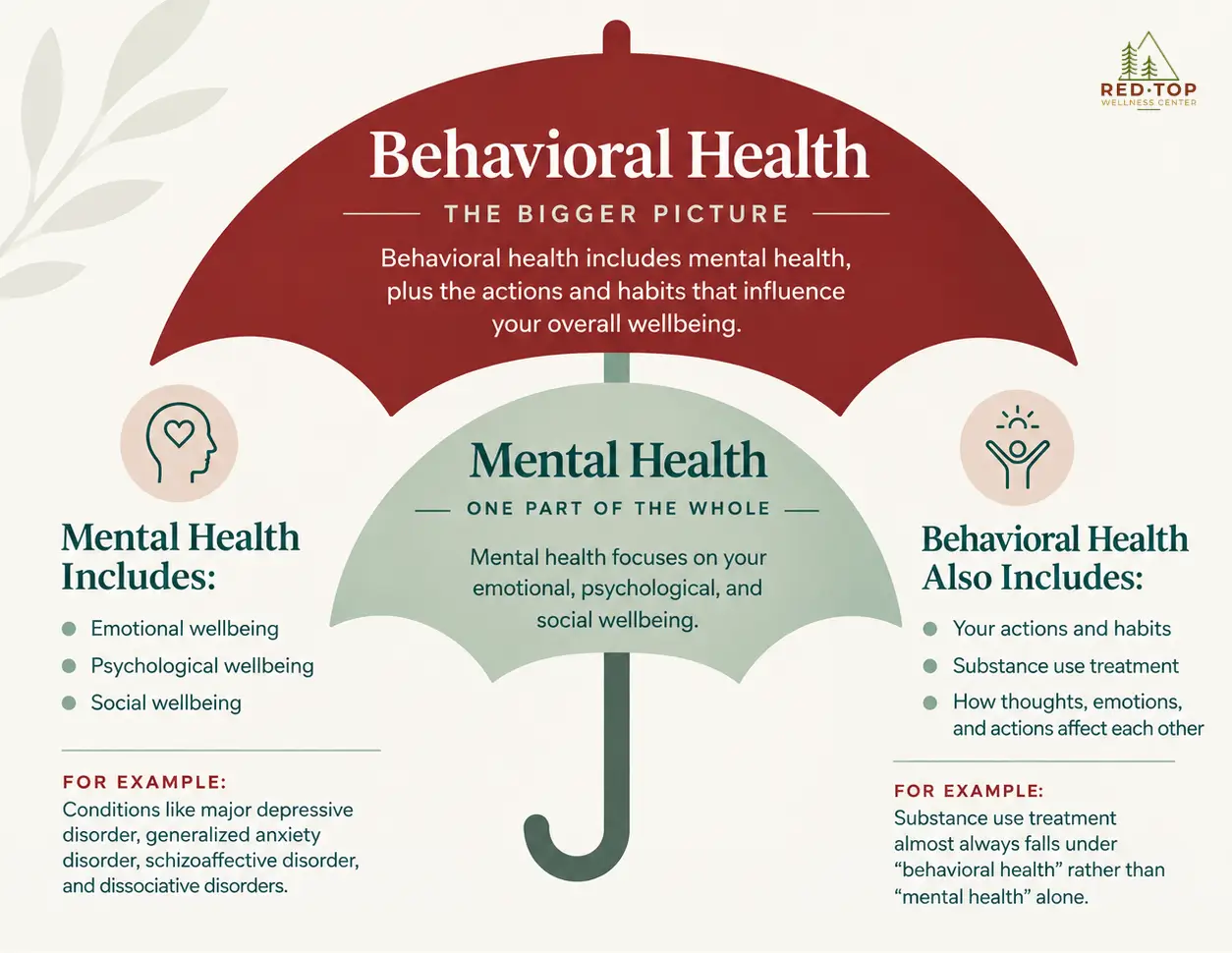
- Behavioral health includes mental health, plus the actions and habits that influence your overall wellbeing. It answers the question, “What’s happening in your thoughts, emotions, and actions, and how do they affect each other?”
- Mental health refers to your emotional, psychological, and social wellbeing. It shapes how you think, feel, manage stress, and relate to other people. It answers the question, “What’s happening in your thoughts and emotions?”
In practice, many providers use the two terms to mean the same thing. A “behavioral health hospital” and a “mental health facility” often offer similar services. Insurance coverage also tends to group mental health and substance use together under “behavioral health benefits.” If you’re comparing programs, focus less on the label and more on what conditions they treat and what therapies they offer.
4 Behavioral Health Examples
Behavioral health covers a wide range of conditions, from mood disorders to substance use. Treatment often addresses all the aspects of the behavioral health issue (thinking, feeling, and acting) together.
Here are some common examples of behavioral health issues:
1. Depression
While depression is often referred to as a mental health symptom, it can become a broader behavioral health issue when it affects a person’s mood, energy, and ability to enjoy things that matter to them. Someone experiencing depression may withdraw from friends, sleep too much or too little, or stop keeping up with work and daily tasks.
These behavioral changes can deepen depression over time. Treatment often focuses on breaking that cycle by building small, steady routines alongside therapy and medication when needed.
2. Anxiety
Anxiety disorders are mental health conditions involving persistent worry or fear that feels hard to control and gets in the way of daily life. When anxiety escalates, it affects much more than your mental health. It can also affect your:
- Emotional wellbeing: Anxiety fuels fears and negative self-talk that can severely impact your emotional state day-to-day.
- Actions: Anxiety causes individuals to avoid situations they fear, which ultimately worsens feelings of anxiety. This is commonly known as the cycle of avoidance.
3. Substance Use Disorders
A substance use disorder involves ongoing use of alcohol or drugs despite harm to your health, relationships, or responsibilities. Signs can include:
- Needing more of a substance to feel the same effect
- Trying to cut back without success
- Experiencing withdrawal
Substance use centers on a behavioral pattern that affects both physical and mental health.
4. Co-Occurring Disorders
Co-occurring disorders, also called a dual diagnosis, happen when someone experiences a mental health condition and a substance use disorder at the same time. For example, a person experiencing anxiety may start drinking to calm their anxious thoughts.
A dual diagnosis can also refer to more than one mental health condition that occurs at the same time. Depending on the mental health symptoms that are present and the substances used, if any, co-occurring disorders can lead to a deteriorating emotional state and harmful behaviors that impact a person’s overall wellbeing.
What Are Behavioral Health Services?
If you’re asking, “What is behavioral health?” it’s likely because you’re exploring your own experiences and the treatment options available to you. If that’s the case, your next question may be, “What are behavioral health services?”
Behavioral health services address the thoughts, emotions, and behaviors that affect your wellbeing. Because behavioral health covers such a wide range of concerns, treatment can look very different from one person to the next. Most care includes the same basic components, though the setting and intensity change based on your needs.
Inpatient vs. Outpatient Behavioral Health Services
Numerous disciplines in the field of healthcare offer treatment at different levels of care. Particularly popular in mental health care, inpatient and outpatient treatment offer different advantages when treating its broader effects on your overall wellbeing:
- Inpatient mental health facilities are treatment centers where you live on-site while receiving care. Some are hospital-based units focused on short-term crisis stabilization, while others are residential programs built for longer-term treatment and skill-building.
- In outpatient care, you attend recurring therapy sessions or participate in a full-day treatment program and return home afterward. This structure allows you to keep living your normal routine while you get support.
Behavioral health services can take the form of either of these levels of care, and the structure that’s best for you depends on several factors, such as the mental health condition you’ve been diagnosed with or the support system you have at home.
What Behavioral Health Treatment Includes
Behavioral health treatment usually begins with an intake assessment, which can also be a valuable tool for determining which level of care is right for you. A clinician asks about your symptoms, substance use, medications, sleep, and other questions about how you’re functioning day to day. They also ask what you’re hoping treatment will help you achieve.
This assessment shapes your care plan and helps your clinical team recommend the right setting. For example, someone experiencing anxiety may compare outpatient vs. residential treatment to determine whether their symptoms could be addressed in weekly therapy or warrant a more structured environment.
Whatever the setting, behavioral health treatment usually combines several types of support:
- Individual therapy with a licensed therapist, often using evidence-based approaches like CBT or DBT
- Group therapy, where you practice new skills and learn from others working through similar challenges
- Medication management, when medication is part of your care plan
- Holistic approaches that support sleep, stress, and physical wellbeing alongside talk therapy
- Discharge and aftercare planning, so you leave with a clear plan for ongoing support
Because behavioral health involves both mental health and behavior patterns, residential programs often address daily habits alongside therapy. Structured routines, regular sleep, shared meals, and physical activity all become part of treatment.