Borderline personality disorder (BPD) and bipolar disorder are two of the most frequently diagnosed psychiatric conditions, and they share multiple symptoms. Because the diagnostic criteria for both conditions is based on the presentation of certain symptoms, the disorders can easily be conflated.
That overlap is why the question of BPD vs. bipolar disorder comes up so often, and knowing their differences can help you sort through your own symptoms or support a loved one experiencing them.
This guide explains the difference between BPD and bipolar disorder, their similarities, and why an accurate diagnosis shapes the right care plan.
FAQs About Borderline Personality Disorder (BPD) vs. Bipolar Disorder
Before comparing the two conditions side by side, it helps to understand what each one is on its own. The answers below cover the basics of BPD and bipolar disorder, whether they can occur together, and how to think about their severity.
What Is Borderline Personality Disorder (BPD)?
Introduced in the DSM-III in 1980, BPD is a personality disorder that causes ongoing instability in a person’s thoughts, feelings, and relationships. An estimated 1.4% of U.S. adults experience BPD each year.
A BPD diagnosis requires the presence of at least five of the following criteria:
- Fear of and extreme efforts to avoid abandonment, whether real or perceived
- Unstable relationships that swing between idealizing and devaluing others
- An unstable or unclear sense of self
- Impulsive behavior in at least two areas that can be self-damaging, like overspending, substance use, or reckless driving
- Recurring self-harm, suicidal threats, or suicidal behavior
- Rapid emotional shifts, like a sudden sense of irritability or anxiety, that usually last a few hours
- Feeling empty more often than not
- Intense anger that’s hard to control
- Stress-related paranoia or feeling detached from yourself (dissociation)
What Is Bipolar Disorder?
Bipolar disorder is classified as a mood disorder, and it’s marked by distinct episodes of extreme moods. Episodes of elevated moods, known as mania or hypomania, exhibit symptoms like racing thoughts, rapid speech, and impulsive behaviors. Depressive episodes are the other extreme, and they’re characterized by symptoms like sadness, fatigue, and feelings of worthlessness.
These episodes can last a few days or weeks. Between episodes, many people return to a stable baseline.
There are also several types of bipolar disorder:
- Bipolar I: At least one manic episode lasting a week or longer, which may be severe enough to require hospitalization. It can also present a depressive episode, but doesn’t always.
- Bipolar II: At least one hypomanic episode and at least one major depressive episode, without a full manic episode.
- Cyclothymia: Ongoing mood swings that don’t meet full criteria for mania or depression but last for two years or more.
- Unspecific bipolar disorder: Mood episodes that don’t exactly match the patterns of bipolar I, bipolar II, or cyclothymia.
Can You Have BPD and Bipolar Disorder at the Same Time?
Yes, BPD and bipolar disorder can occur together. One study found that comorbidity between the two disorders is common, with roughly one in five people experiencing both conditions at the same time.
Of course, when both conditions are present, it may feel like the symptoms are harder to sort out. However, other studies emphasize that clinicians can precisely identify which condition is present, or the presence of both conditions, using well-recognized symptom assessments.
If you’re experiencing both BPD and bipolar disorder, each condition can make the other harder to manage and, in some cases, riskier. For example, one study found that people experiencing both conditions reported thoughts of suicide more often than people experiencing only one.
That’s why it helps to find treatment that addresses both conditions at the same time. Dual diagnosis treatment accounts for how mood episodes and BPD symptoms affect each other, so that all aspects of your mental wellbeing are addressed together.
Which Is Worse, Bipolar or BPD?
Neither condition is worse than the other, and the severity of each condition’s symptoms varies widely from person to person. Both can cause serious distress, even in the areas where their symptoms differ.
The more useful question is which condition, or whether the combination of both conditions, best explains your symptoms. Both BPD and bipolar disorder respond well to treatment, and knowing which condition you’re experiencing determines which treatments are most likely to help.
10 Differences Between BPD and Bipolar
In general, the difference between BPD and bipolar disorder can be described in 10 distinct categories:
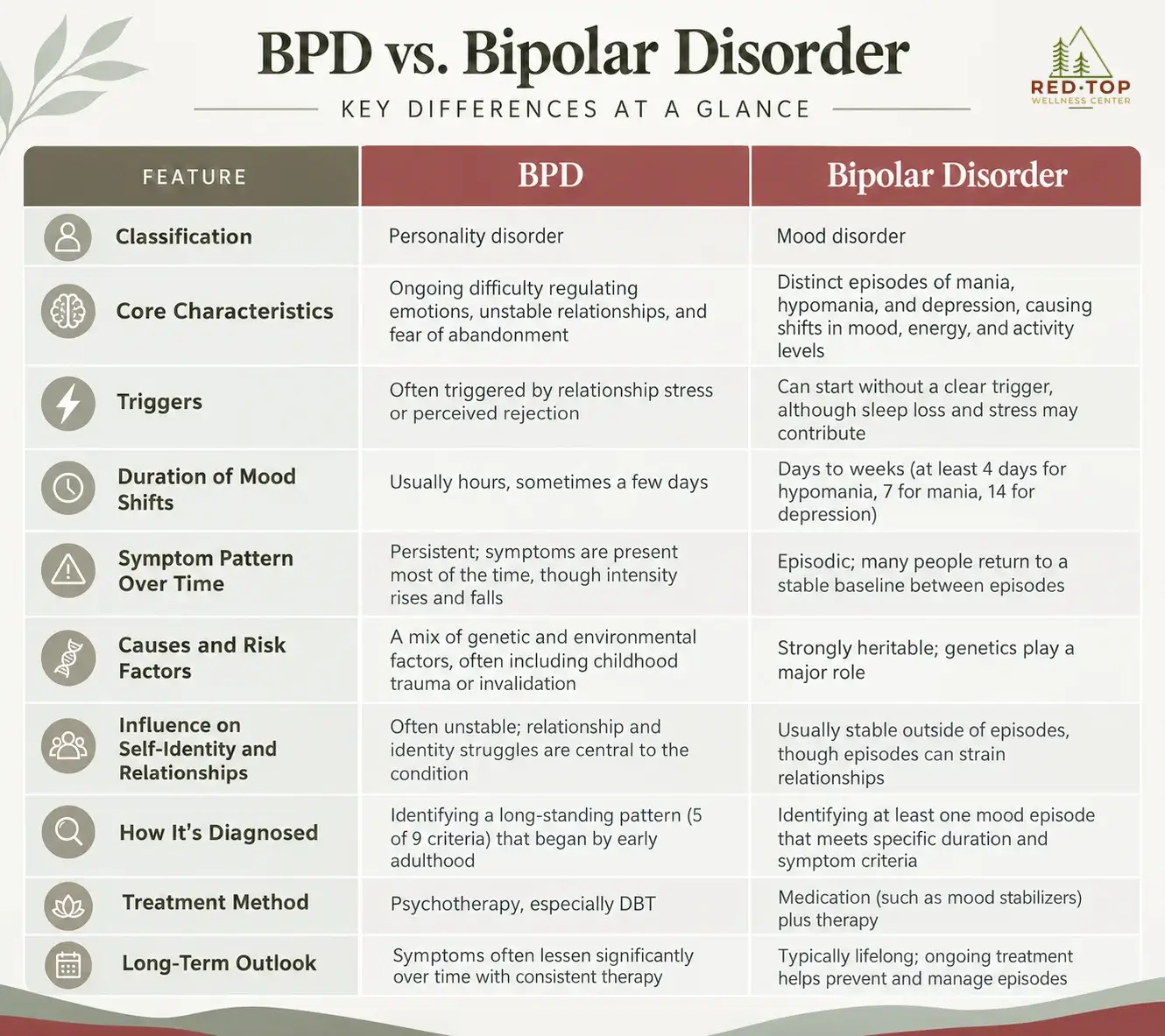
1. Classification
BPD is a personality disorder, which is a category of mental health conditions that affects someone’s thoughts, feelings, and behaviors. A personality disorder may cause someone to go through long-standing patterns of struggling to relate to themselves or others.
Bipolar disorder is a mood disorder, which is a group of mental health conditions that disrupt a person’s emotional state. Its symptoms come in distinct episodes that show a clear change from how a person usually feels, and can ultimately hinder their ability to function like they usually do.
2. Core Characteristics
Comparing the core characteristics of BPD vs. bipolar disorder highlights a few key differences:
- Frequency: BPD is characterized by ongoing emotional dysregulation,while bipolar disorder is a cycle of mood episodes.
- Mood: BPD makes it difficult to regulate emotions, while bipolar disorder causes a few distinct emotions depending on what type of episode (hypomania, mania, or depressive) presents itself.
- Sleep: BPD can disrupt sleep, and it usually leaves the person feeling drained. Bipolar disorder can cause someone to feel energetic or fully rested, regardless of how much sleep they’ve gotten, especially during mania or hypomania.
3. Triggers
BPD mood changes are reactive, usually following interpersonal stress. For example, a canceled plan, a delayed text, or feeling like you’re being criticized may trigger symptoms of BPD.
Bipolar episodes, on the other hand, can begin without any clear cause. Lack of sleep or an increase in stress levels may contribute, but once an episode starts, it often follows its own course regardless of what happens around the person.
4. Duration of Mood Shifts
This is often the clearest dividing line. In bipolar disorder, a manic episode lasts at least a week, a hypomanic episode lasts at least four days, and a depressive episode lasts at least two weeks.
In BPD, emotions can move from calm to intense anger or despair within hours, sometimes several times in one day. These shifts are painful and real. They move much faster than the sustained mood episodes of bipolar disorder.
5. Symptom Pattern Over Time
Bipolar disorder follows an episodic pattern. Between mood episodes, many people return to a stable baseline and function the way they usually do.
With BPD, symptoms are more constant. Their intensity rises and falls from day to day, but the underlying emotional and relationship patterns are present most of the time.
6. Causes and Risk Factors
Bipolar disorder is a highly heritable mental health condition. Having a parent or sibling with bipolar disorder significantly raises a person’s risk of developing the condition.
BPD also has a genetic component, but environmental factors play a role, too. Many people experiencing BPD report childhood trauma, neglect, or growing up in an environment where their emotions were dismissed or invalidated.
7. Influence on Self-Identity and Relationships
Relationship instability and struggles with self-identity are core characteristics of BPD, because difficulty regulating emotions can lead to significant relationship strain. Someone experiencing BPD may feel unsure of who they are or what they value, and that uncertainty can change quickly.
In bipolar disorder, manic and depressive episodes can strain relationships when others are navigating the behaviors that are fueled by extreme symptoms.
The main difference between BPD and bipolar disorder in terms of relating to others boils down to how consistently these relationships are feeling strained. When someone experiencing bipolar disorder is in between episodes, their interpersonal skills and sense of self-identity are typically steadier.
8. How Each Condition Is Diagnosed
To identify the presence of BPD vs. bipolar disorder, a clinician may consider:
- Official diagnostic criteria: The DSM 5 lays out specific criteria for diagnosing BPD vs. bipolar disorder. A BPD diagnosis requires at least five of nine pre-established criteria. A bipolar diagnosis depends on identifying at least one mood episode that meets specific criteria for symptoms and duration.
- Symptom history: For BPD, clinicians will look for a long-standing pattern of symptoms, usually beginning by early adulthood. Bipolar disorder is inherently episodic, so clinicians will review a person’s history over the past few months or years to find periods where symptoms flared.
- Areas of life affected: While both conditions can affect various areas of a person’s life, each disorder looks a little different in day-to-day life. BPD is wide-reaching, influencing everything from relationships to work to hobbies. Bipolar disorder symptoms may ebb and flow, meaning that sometimes, they can creep into every area of life, and other times, they’re practically nonexistent.
9. Treatment Method
Treatment methods overlap for BPD and bipolar disorder, but they each respond best to a different primary approach:
- BPD treatment is primarily centered on psychotherapy. Dialectical behavior therapy (DBT) was developed specifically for BPD and teaches skills in four areas: mindfulness, distress tolerance, emotion regulation, and interpersonal effectiveness.
- Bipolar disorder treatment is typically grounded in medication. Mood stabilizers, such as lithium and antipsychotic medications, help prevent and manage manic and depressive episodes.
It’s important to note that these treatment methods can apply to both diagnoses, and an effective treatment plan incorporates several approaches to ensure it comprehensively addresses your symptoms. For example, a person experiencing bipolar disorder may benefit from cognitive behavioral therapy (CBT), a form of talk therapy that can help you spot early warning signs or episodes and manage depressive thinking.
The FDA has not approved any medication specifically for BPD. A psychiatrist may still prescribe medication for certain symptoms, such as depression or anxiety, as part of a broader care plan.
10. Long-Term Outlook
Research over the past two decades indicates that BPD has a positive trajectory over time. Symptoms often improve significantly during the first few years of treatment, although co-occurring conditions may persist or make recovery more challenging.
Bipolar disorder is considered a lifelong condition and currently has no permanent cure. However, ongoing treatment helps many people keep episodes to a minimum and live full, stable lives.
How Residential Treatment Can Help
Understanding the difference between BPD and bipolar disorder is the first step toward getting help for yourself or a loved one. The next step is working with a clinical team that takes the time to understand your symptoms, your history, and what you want treatment to help you achieve.
Residential treatment for borderline personality disorder (BPD) and bipolar disorder may be a good fit for you if:
- Your symptoms are disrupting work, relationships, or daily routines
- Outpatient therapy hasn’t led to lasting progress
- You want to better understand what’s driving your symptoms
At Red Top Wellness Center, our residential setting allows our clinical team to watch mood patterns over days and weeks, so we can narrow down what’s driving your symptoms and the treatment method that makes the most sense for you. Our program includes:
- Diagnostic clarity: Ongoing observation helps clinicians tell whether BPD, bipolar disorder, or both explain your symptoms. They then build a personalized care plan around what you’re experiencing.
- Evidence-based therapies: We may incorporate CBT or DBT in your care plan, or both therapies, depending on what approaches work best for you. Our team is also trained in other therapeutic methods, like acceptance and commitment therapy (ACT), and can make a decision about what will help you best based on their assessment of your symptoms.
- Complementary therapies: We believe in a holistic approach to treatment, which means your daily schedule in residential care will involve more than just talk therapy sessions every hour. We offer Biosound therapy, red light therapy, and other complementary approaches to help you relax in between psychotherapy sessions.
We provide residential mental health treatment in Cartersville, Georgia, for adults from the greater Atlanta area and beyond. When you’re ready to start your recovery journey, contact our team to learn more about our program for you or your loved one.