Dissociative identity disorder (DID), also known as multiple personality disorder, is just one of several types of dissociative disorders causing a disconnect between someone’s thoughts and identity. Commonly reduced to a dramatic plot device in film and television, DID is rarely recognized as the highly treatable condition it actually is.
In reality, effective dissociative identity disorder treatment can make an enormous difference for someone experiencing the condition. If you or a loved one are interested in DID treatment, understanding how that treatment works may be the push you need to take the first step toward healing.
This article walks through what evidence-based treatment for DID looks like in practice.
What is the Goal of Dissociative Identity Disorder Treatment?
Before exploring different treatment and management approaches for dissociative identity disorder, it’s important to understand what these treatments are positioned to accomplish.
In most cases, DID develops as the mind’s way of surviving overwhelming and repeated trauma, such as chronic abuse or neglect, before a person has the cognitive tools to process what is happening to them. Rather than forming one sense of self, the mind compartmentalizes experiences into separate identity states, sometimes called “alters.”
The goal of treatment is to help the whole internal system, or all parts of a person, work together with more communication for greater day-to-day functioning. For some people, that means less internal conflict. For others, it involves cooperative coexistence among identity states. Either outcome can represent real recovery.
Realistic Expectations for Recovery
One of the most important things a person or family can do before starting treatment is calibrate their expectations honestly. A few important things to remember include:
- Recovery takes time. Because DID typically forms over years of early developmental trauma, unwinding it is rarely quick. The full arc of treatment, including trauma processing and integration work, commonly spans years. A residential stay is usually a foundational element of the healing process, but continued work is necessary to sustain symptom management.
- Progress isn’t always linear. Setbacks, temporary destabilization, and periods where symptoms feel more pronounced are a normal part of trauma treatment. Trained therapists and clinicians expect this rhythm, which is why they build flexibility into the treatment plan.
- Co-occurring conditions need attention, too. Depression, anxiety, PTSD, substance use, and eating disorders frequently accompany DID. Ignoring them in favor of focusing exclusively on dissociation tends to slow overall progress. Comprehensive treatment for a dual diagnosis addresses the whole clinical picture.
The Phased Treatment Model for DID
The most widely used framework for treating DID is a phase-oriented model, incorporating psychotherapy to integrate a person’s different identity states in stages. Notably recommended by The International Society for the Study of Trauma and Dissociation, this treatment structure involves three phases:
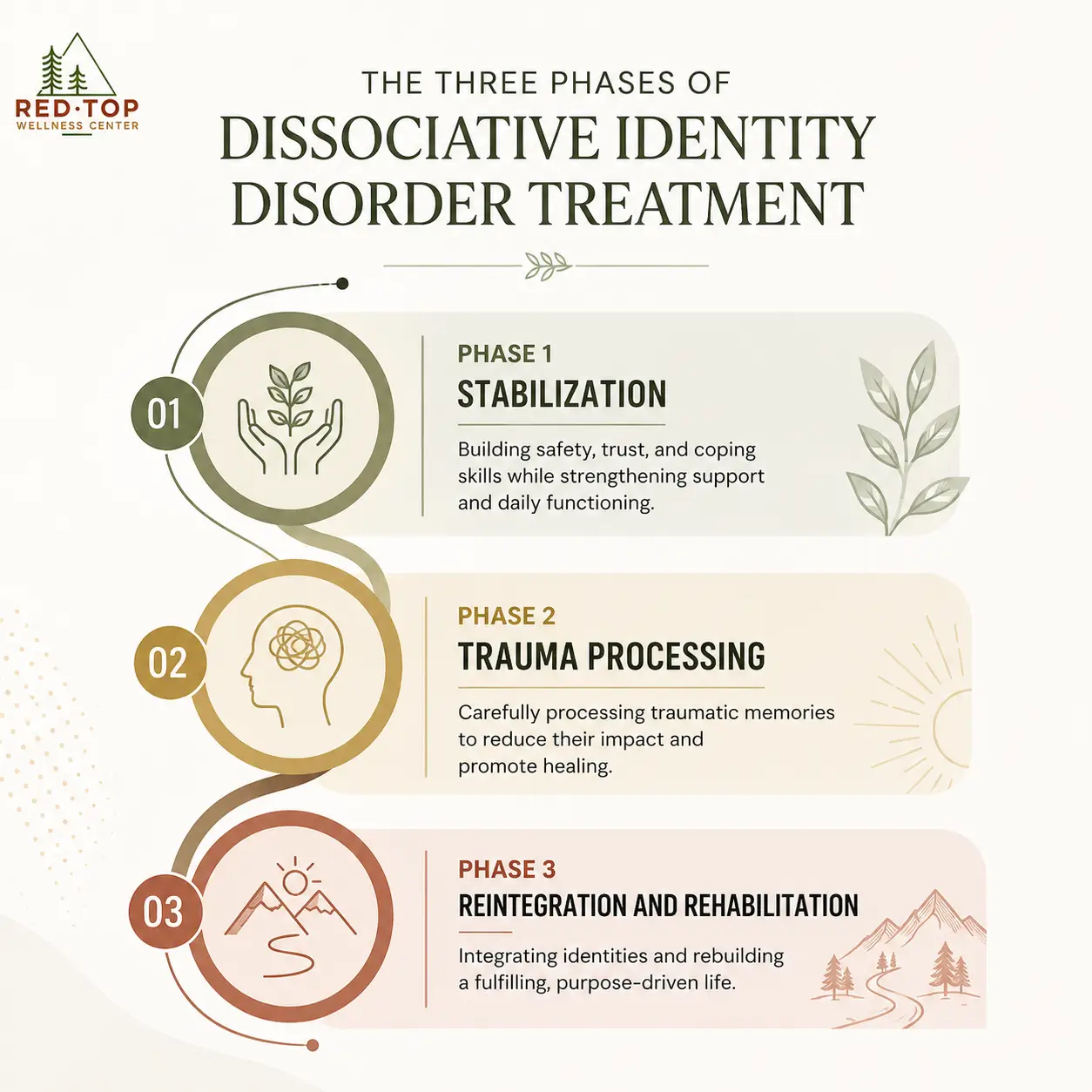
Phase 1: Stabilization
Stabilization is often considered the longest and most foundational phase of DID treatment, because trauma processing isn’t effective if a person’s daily life is still in crisis. Stabilization focuses on:
- Establishing physical and emotional safety, including reducing self-harm, substance use, or other high-risk behaviors
- Building a trusting relationship with a primary therapist
- Developing grounding and emotional regulation skills
- Improving communication and cooperation between identity states
- Addressing co-occurring conditions like depression, anxiety, PTSD, or eating disorders that frequently accompany DID
- Creating structure and predictability in daily routines
Phase 2: Trauma Processing
Once a person has built internal stability and coping capacity, treatment can begin to carefully process the traumatic memories that fueled the original dissociation. This is done gradually and collaboratively, often using trauma-focused modalities such as:
- Eye Movement Desensitization and Reprocessing (EMDR) can help individuals experiencing dissociative identity disorder process traumatic memories that contribute to dissociation.
- Cognitive Behavioral Therapy (CBT) helps individuals with DID identify and challenge unhelpful thought patterns while developing healthier coping strategies for managing distress. It can also reduce symptoms of anxiety, depression, and PTSD that commonly occur alongside DID.
- Dialectical Behavioral Therapy (DBT) teaches practical skills for regulating emotions, tolerating distress, and improving interpersonal relationships. For people with DID, these skills can increase emotional stability and reduce self-destructive behaviors while supporting long-term trauma recovery.
We’ll cover these therapies in more detail later, but generally, these approaches are applied at a pace that makes the most sense for the individual.
Phase 3: Reintegration and Rehabilitation
The final phase focuses on building a coherent sense of one’s identity and history, and re-engaging with a fuller life. Here, the person receiving dissociative identity disorder treatment will work toward the complete fusion of their identity states into a more unified sense of self.
It’s worth noting that these three phases are not a strict staircase. People often move back and forth. For example, a crisis might require returning to stabilization work even after processing has begun. Effective DID treatment is flexible enough to meet a person where they are on any given day.
5 Primary Treatment Methods for Dissociative Identity Disorder
Cognitive Behavioral Therapy (CBT)
Cognitive behavioral therapy (CBT) helps people recognize and shift the thought patterns that perpetuate dissociation, shame, and self-blame. For someone experiencing DID, this often involves:
- Learning to identify triggers that prompt a switch between identity states
- Challenging distorted beliefs formed during childhood trauma (such as “I deserved what happened to me”)
- Building practical coping strategies for anxiety, depression, and PTSD symptoms that commonly accompany DID
Dialectical Behavioral Therapy (DBT)
Dialectical behavioral therapy (DBT) was originally developed for chronic emotional dysregulation, which makes it a natural fit for DID, where different identity states may hold very different emotional responses to the same situation. DBT teaches four core skill sets:
- Mindfulness
- Distress tolerance
- Emotion regulation
- Interpersonal effectiveness
These skills help you stay grounded across identity states rather than being swept into crisis by any one part’s reaction. As a result, DBT skills can reduce self-harm and impulsive behavior significantly enough to make deeper trauma work possible.
Eye Movement Desensitization And Reprocessing (EMDR)
EMDR uses guided eye movements or other bilateral stimulation to help the brain reprocess traumatic memories that have become “stuck” in their original, unprocessed form.
For DID specifically, EMDR must be adapted and paced carefully. A clinician trained in dissociation will first ensure the internal system has enough stability and cooperation to tolerate accessing traumatic material, since processing memories too early or too fast can overwhelm the system.
When properly paced, EMDR can reduce the intensity of traumatic memories and lessen how much they continue to drive dissociative symptoms.
Medication Management
No medication treats DID directly, since it’s a psychological rather than a chemical condition. Medication management instead targets the symptoms that frequently accompany DID, such as:
- Depression
- Anxiety
- PTSD symptoms
- Sleep disruption
Medication may be used to alleviate these symptoms so that a person in DID treatment has enough day-to-day stability to engage in therapy. A psychiatric provider will typically monitor how any prescribed medication interacts with the person’s broader treatment plan, adjusting as needed since different identity states may report symptoms differently.
Holistic Therapies
Holistic approaches complement talk therapy by supporting nervous system regulation and emotional health. These modalities are typically used alongside, not instead of, trauma-focused psychotherapy.
Popular types of holistic therapies may include:
- Yoga
- Red light therapy
- Mindfulness practice
- Art or music therapy
- Biosound or sensory-based therapies
For people experiencing DID, body-based and expressive therapies can offer a way to access emotions or memories that feel too threatening to approach verbally.
What Dissociative Identity Disorder Treatment Looks Like at Red Top Wellness Center
At Red Top Wellness Center, located in Cartersville, Georgia, dissociative disorder treatment is built around the same phase-informed principles described above. Our residential program provides the structure and safety you need to begin stabilizing symptoms, processing trauma, and re-integrating into daily life with confidence.
Highlights of our dissociative identity disorder treatment approach include:
- A personalized treatment plan developed with a primary therapist experienced in treating dissociative disorders
- Trauma-focused therapy, drawing on modalities like EMDR, CBT, and DBT to help process traumatic material once stabilization allows for it
- Medication management, where appropriate, to address co-occurring symptoms such as depression, anxiety, or sleep disruption
- Peer connection, giving you the chance to connect with others facing similar challenges in a supportive community
- 24/7 support in an environment designed specifically for people navigating complex trauma and dissociation
Many people in DID treatment benefit significantly from an initial period of residential, or inpatient, stabilization rather than trying to build these skills through outpatient therapy alone. A period of residential treatment, especially in the beginning of a diagnosis, can be the turning point that makes the rest of recovery possible.
Taking the Next Step
Dissociative identity disorder treatment can help you successfully move forward from the condition’s symptoms, and a structured approach, like residential care, provides the best foundation for lasting recovery. If you or someone you love is showing signs of DID, a professional evaluation may be the best step they can take.
Red Top Wellness Center’s residential program in Cartersville, Georgia offers specialized, trauma-informed care for dissociative disorders. Our program is built around personalized treatment planning, experienced clinical staff, and a supportive environment designed for genuine healing. To learn more or verify your insurance coverage, contact our team today.