When we talk about holistic health, we’re talking about the entire person: body, mind, and spirit. Holistic therapy is an integrative approach to mental health treatment that addresses the whole person, not just one condition or set of symptoms.
In this guide, we’ll explore what holistic therapy is, why it’s used, and how to find it.
What is Holistic Therapy?
Holistic therapy is a type of mental health treatment that addresses an individual as a whole rather than focusing solely on symptoms or specific issues. This approach is grounded in the understanding that a person’s mind, body, and spirit are interconnected. As such, mental health treatment should consider all aspects of a person’s wellbeing, including:
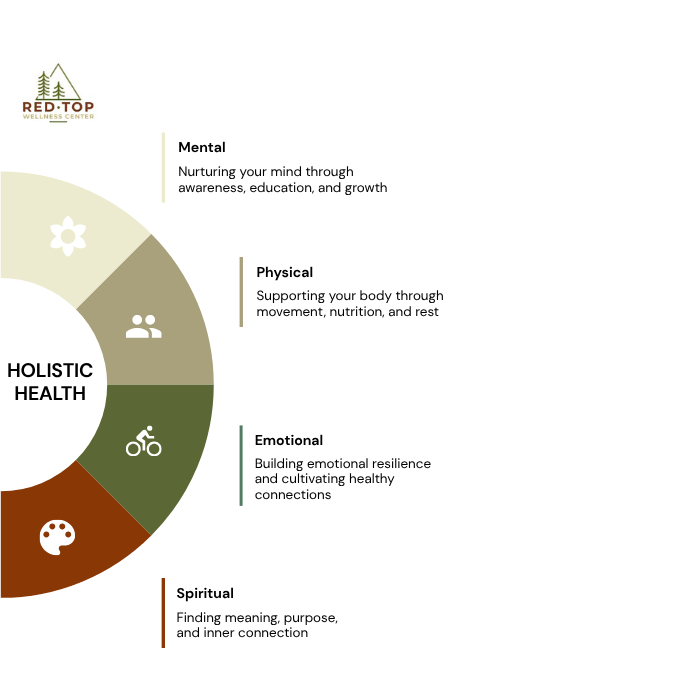
- Mentally: Nurturing your mind through awareness, education, and growth
- Physically: Supporting your body through movement, nutrition, and rest
- Emotionally: Building emotional resilience and cultivating healthy connections
- Spiritually: Finding meaning, purpose, and inner connection
Applications of Holistic Therapy for Mental Health
Holistic therapy aims to identify and address the root causes of whatever challenges you’re facing, making it especially beneficial for conditions such as:
- Anxiety and panic disorders: Applying holistic principles to help individuals cope with anxiety could involve a variety of practices, such as engaging in physical activities that promote relaxation or adopting dietary changes that support mental health. For instance, while medication may help manage the physiological symptoms of panic, you may need to try mindfulness practices to address the underlying stress that triggers an attack.
- Depression: Holistic therapy for depression emphasizes restoring balance across emotional, physical, and lifestyle factors. By addressing underlying imbalances, it can lead to more sustainable improvement and help individuals build a stronger foundation for long-term mental health.
- Addiction: A holistic approach to addiction focuses on healing the root causes of dependency while supporting long-term recovery. This broader focus can be effective because it supports lasting recovery by strengthening self-awareness and resilience, reducing the likelihood of relapse rather than simply managing the behavior itself.
How Does Holistic Therapy Complement Traditional Treatment?
Holistic therapy can complement traditional treatments for nearly any mental health challenges. For example, schizophrenia medication may be a vital component of effectively treating the condition, but holistic approaches can also be integrated to mitigate side effects and support overall healing. This makes holistic therapy especially effective for addressing co-occurring conditions. Using the same example, a person needing therapy for histrionic personality disorder (HPD) and schizophrenia may benefit from a combination of traditional and holistic treatments, because this comprehensiveness targets symptoms of both conditions.
It’s typically combined with traditional talk therapies, such as:
- Cognitive Behavioral Therapy (CBT): CBT is a type of therapy that helps individuals understand the relationship between their thoughts, emotions, and behaviors. This is especially helpful for helping people change their negative thought patterns and minimize emotional distress.
- Dialectical Behavioral Therapy (DBT): DBT is a form of therapy that helps individuals cope with unwanted situations, understand and manage their feelings, and improve communication with others. Keep in mind that CBT and DBT are different; DBT combines CBT with mindfulness practices to help treat emotional regulation and impulsive behaviors.
- Acceptance and Commitment Therapy (ACT): ACT builds psychological flexibility, or the ability to accept and adjust to challenging situations. This type of therapy works by helping you minimize negative thoughts and identify your core values so you can respond to challenges appropriately.
Whether holistic therapy is right for you depends on your unique circumstances and needs. It’s essential to consider your comfort level with exploring different therapies, your commitment to active participation in your healing process, and your belief in the interconnectedness of mind, body, and spirit.
Remember, there is no one-size-fits-all approach to mental health treatment. What works for one person might not work for another. Therefore, it’s best to have open discussions with a trusted healthcare provider about your preferences and concerns.
Types of Holistic Therapy
Holistic therapy incorporates a variety of alternative therapies based on individual needs. Some innovative therapies used in a holistic approach include:
1. Red Light Therapy
Red light therapy uses low-level wavelengths of red light as a safe, non-invasive treatment for various conditions. Sessions typically last 10 to 20 minutes and occur two or three times per week.
This method has been studied for its potential to:
- Treat neurological disorders
- Optimize treatment protocols
- Complement other treatment efforts, such as photodynamic therapy
Red light therapy is particularly useful for treating the following conditions:
- Anxiety: The benefits of red light therapy for anxiety are fairly well-known. Some studies show that this holistic therapy can ease uncomfortable symptoms of anxiety, such as an inability to sleep, while others saw direct improvements on anxiety symptoms after red light therapy use.
- Depression: Many studies have suggested the usefulness of red light therapy for depression, specifically due to the therapy’s anti-inflammatory properties and ability to boost brain function.
- Obsessive-Compulsive Disorder (OCD): Many studies are considering the applications of red light therapy for OCD. While still early, research does seem to suggest that this holistic therapy could have positive effects on OCD symptoms.
It’s worth noting that this type of therapy should only be administered by a trained medical professional. Avoid visiting spas or salons for red light therapy where staff may not be qualified to administer this treatment.
2. Biosound Therapy
Biosound therapy is a multisensory therapy approach that reduces anxiety and encourages relaxation through:
- Biofeedback
- Music therapy
- Sound frequency massage
- Guided imagery
It works by emitting low-frequency sound waves that resonate through the body. This creates a soothing and calming effect, which is particularly beneficial for those struggling with stress-related disorders.
3. Art Therapies
Art therapy uses creative expression to help people process emotions and experiences that are difficult to put into words. It’s facilitated by a team of trained therapists, and each session is built around specific therapeutic goals.
Art therapy techniques could include:
- Guided imagery drawing, where you visualize a specific memory, feeling, or safe place before putting it on paper
- Collage work, which lets you build a visual narrative using found images rather than words
- Mask-making, often used to explore the gap between how someone presents outwardly and what they’re actually feeling
This modality is especially valuable for trauma processing, since traumatic memories are often stored non-verbally and can be hard to access through conversation alone. Art therapy can surface feelings, patterns, or memories you weren’t consciously aware of. From there, a therapist can then help you explore and work through them.
This holistic therapy is also a strong fit for people who process more visually or physically than verbally, or those who feel guarded in traditional talk therapy settings and need a lower-pressure way to start opening up.
4. Nutrition
Nutrition can significantly impact mental health, and certain dietary choices can either exacerbate or alleviate certain symptoms.
For instance, consuming excessive amounts of caffeine or sugar can worsen panic attacks in some individuals due to their stimulating effects. Conversely, a diet rich in whole foods can provide the body with the necessary nutrients to support a healthy nervous system and stable mood. Whole foods include:
- Fruits
- Vegetables
- Lean proteins
- Complex carbohydrates
5. Yoga and Movement Therapy
Yoga combines physical movement, breathwork, and mindfulness to reduce anxiety and improve mood regulation. Slow, controlled movements along with intentional breathing activate the parasympathetic nervous system, which can offset the heightened fight-or-flight response often seen in anxiety, PTSD, and early recovery from substance use.
Yoga therapy sessions usually include:
- Gentle, trauma-informed yoga sequences tailored for different physical abilities and past injuries
- Breathwork practices that interrupt the stress response in real time
- Guided body-awareness exercises that help residents reconnect with physical sensations they may have learned to suppress
Movement-based therapy is also a good entry point for people who find traditional talk therapy intimidating or struggle to sit still with difficult emotions. Since yoga encourages the body to calm down before the mind processes thoughts, it often makes the subsequent talk therapy more effective for those who enter treatment feeling highly activated or shut down.
6. Sleep
Sleep and mental health have a two-way relationship. Poor sleep makes mood, anxiety, and thinking worse. At the same time, conditions like depression, anxiety, and PTSD often disrupt sleep. This creates a cycle that’s tough to break without directly addressing sleep.
Someone might make real progress in therapy during the day but still find it hard to manage their mood if their sleep is broken at night. Because of this, a holistic treatment plan often focuses on stabilizing sleep first, rather than waiting until other symptoms improve.
Sleep quality impacts mental health in several clear ways. It affects emotional control since a sleep-deprived brain struggles to handle stress and reactivity. It influences the nervous system’s normal state, making it easier to fall into anxiety or irritability when rest is inconsistent. Sleep also plays a direct role in memory formation and the brain’s ability to process the emotional events of the day. This is one reason sleep disruption is common with trauma and PTSD.
Practical strategies to support better sleep include:
- Limiting screen time before bed: Blue light exposure reduces melatonin production and delays the body’s natural wind-down process.
- Creating a consistent pre-sleep routine: Relaxing activities, such as reading, light stretching, or taking a warm bath, signals to the body that it’s time to rest.
- Maintaining a regular sleep and wake schedule: Consistency helps stabilize the circadian rhythm.
- Optimizing the sleep environment: Often, the ideal sleeping environment is a cool, dark, quiet room free of distractions.
Benefits of Holistic Therapy
Addressing only one aspect of your mental health challenges may provide temporary relief, but for long-term management, a comprehensive plan is key. It’s about creating a personalized tapestry of treatments that work in harmony to alleviate symptoms and build resilience.
Holistic therapy takes a broader view, recognizing that mental health is shaped by the ongoing interaction between your thoughts, physical health, environment, and daily habits. Some of the key benefits include:
- Whole-person support: Care is tailored to your mental, physical, and emotional needs, rather than focusing on just one area.
- Long-term effectiveness: By addressing root causes, holistic therapy can help reduce recurring symptoms. For example, if you tend to avoid anxiety-inducing situations, holistic therapy can address the root case of your anxiety and give you the confidence to embrace those situations in the future.
- Improved self-awareness: You gain a deeper understanding of how different aspects of your life influence your mental health.
- Greater resilience: Building healthy habits and coping mechanisms can make it easier to navigate future challenges.
- Personalized care: Treatment plans are flexible and adaptable, evolving with your needs and goals.
Over time, this approach can help you feel more balanced, empowered, and better equipped to maintain your overall wellbeing.
How Red Top Wellness Center Uses Holistic Therapy for Mental Health Treatment
At Red Top Wellness Center, holistic therapy is central to how we operate. Treating the whole person is one of the core tenants of our residential treatment program, and we’re proud to offer numerous activities outside of traditional therapy to help you express yourself and find healing during your time in our facility. In addition to talk therapies and group support, we offer:
- Red light therapy
- Biosound therapy
- Recreational activities, such as art and music
- Outdoor games
Every part of your treatment plan is orchestrated and monitored by our trained clinical staff, so you can trust that you’re receiving care backed by proper training. Depending on the type of holistic therapy that makes the most sense for your treatment plan, we may schedule it around your individual and group therapy blocks so that they become a regular part of your weekly schedule. Our team monitors frequency and duration the same way we’d track any other clinical intervention, and sessions are documented as part of your overall treatment plan.
Contact us online or call us at 470-227-7574 to start your journey towards comprehensive wellness. Together, we can uncover the best treatment approach for you.