If you’re seeking residential treatment for anxiety, a number of motivations could be fueling your search. Perhaps you’ve tried outpatient care and it didn’t provide the depth you were looking for. Maybe you’re searching “inpatient treatment for anxiety near me” because you need something nearby. For many, the difference between outpatient and residential care is unclear, and they’re not sure how to choose the level of care that makes the most sense for them.
Whatever brought you here, you’re asking the right questions, and this guide is meant to help you answer them. Approximately one in five U.S. adults are diagnosed with anxiety disorders that are highly treatable, but “treatable” doesn’t mean “one-size-fits-all.” Some people do well with a weekly therapy appointment and a few coping tools. Others need a more structured environment to actually get traction.
In this guide, we’ll walk through the differences between outpatient and residential treatment so you can make an informed decision about your care.
The Main Differences Between Outpatient and Residential Treatment for Anxiety
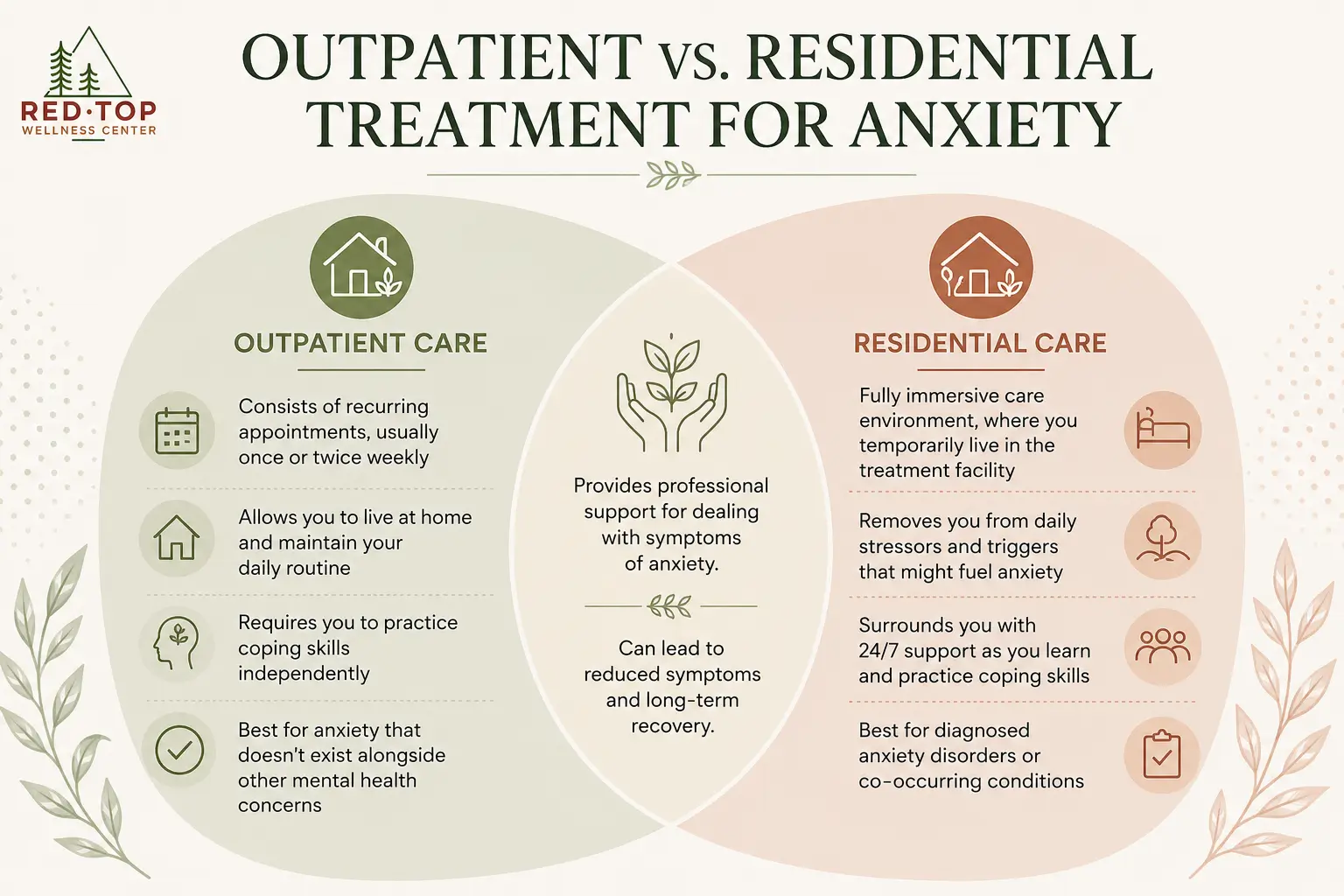
Outpatient and inpatient care both provide professional support for dealing with symptoms of anxiety. Depending on the severity of your condition and the nature of your care, either format can lead to reduced symptoms and long-term recovery. However, each treatment structure treats anxiety differently.
Generally speaking, there are four primary differences between outpatient and residential treatment for anxiety:
- The intensity of treatment
- The treatment environment
- The level of independence
- Whether or not support is offered for additional mental health concerns
What is outpatient anxiety treatment?
Outpatient anxiety treatment is a level of care in which you attend scheduled therapy sessions without staying overnight in a treatment facility. This is typically someone’s first exposure to anxiety treatment, and may involve a once-a-week appointment with a therapist depending on the exact treatment schedule you plan with your provider.
Here’s what your experience in an outpatient program may look like:
- Recurring appointments, usually once or twice weekly
- Living at home and maintaining your daily routine, such as school or work
- Practicing coping skills on your own and in everyday situations
This structure is best for treating anxiety that’s present, but not disabling. If you have the bandwidth between sessions to practice coping strategies and manage relationships or daily tasks, this may be the perfect fit for you. But if complicating factors, such as co-occurring substance use issues or a history of trauma, are contributing to your anxiety, you may need a higher level of care.
What is residential treatment for anxiety?
Inpatient, or residential, treatment for anxiety is a care structure that completely immerses you in a therapeutic environment. In a residential program, you’re focusing fully on recovery and not on any of the daily responsibilities that typically demand your attention.
Here’s what your experience in a residential treatment for anxiety may look like:
- A temporary (typically 30-day) stay in a treatment facility
- Relief from the daily stressors, such as work, school, or household responsibilities, that may be feeding your anxiety in the first place
- Around-the-clock care from a team that’s experienced in anxiety
Residential care is best for treating diagnosed anxiety disorders and any co-occurring conditions existing alongside them. You might consider residential treatment for yourself or a loved one if anxiety symptoms are so severe that they’re interfering with basic functioning, such as eating, sleeping, working, or leaving the house.
Many people also choose residential care after outpatient therapy has been unsuccessful. In general, mental health treatment tends to produce more meaningful change when it starts with a higher level of care and gradually works down to a less intensive care option.
How to Choose Between Outpatient and Residential Treatment for Anxiety
Even if you’re familiar with the available treatment options, you may still be unsure of the structure that will work best for you. Here are a few things to consider when trying to decide between outpatient and residential care:
Recognize The Signs
There are some fairly reliable signals that can point to the need for a higher level of care.
- You’re avoiding everyday activities. Anxiety can cause a cycle of avoidance, which tends to reinforce anxiety rather than relieve it. If your symptoms are holding you back from certain activities, such as going to specific places, making phone calls, or handling responsibilities on your own, residential treatment for anxiety can be extremely beneficial.
- Physical symptoms are escalating. The body will give you clear signs when it’s under sustained physiological stress. You might notice panic attacks increasing in frequency or intensity, chest pain, gastrointestinal distress, insomnia that’s lasted weeks, or significant weight change. These physical symptoms should be addressed first in a medical setting to rule out other causes, like cardiac conditions. Once you’ve confirmed that anxiety is at the root of these symptoms, residential care gives them the level of attention they need.
- You’re relying on substances to get through the day. Many people use alcohol or other substances to blunt anxiety, but substance use can actually perpetuate symptoms further or worsen the condition. If you’re struggling with substance use, the 24/7 support and immersive treatment experience offered by residential care may be the best path forward.
Keep in mind that the above list isn’t exhaustive. Deciding which level of care is best for you based on a general list of possible signals is like diagnosing a broken bone with a Google search. It may be helpful for gathering more information about your concerns, but the only real way to know what you need is by getting an X-Ray.
Think about a clinical assessment as an “X-Ray” for mental health. When you call an anxiety treatment center, like Red Top Wellness Center, you can speak with an experienced professional who knows what signs to look for and whether a residential program is right for you. We can even direct you to the right resources for outpatient care if inpatient doesn’t sound like the right fit.
Understand Your Coverage
Cost and coverage are, understandably, one of the biggest barriers to seeking residential care. In fact, a survey by The Harris Poll found that about half (52%) of people diagnosed with a mood disorder say that cost was an obstacle to trying treatment.
It’s important to know that many major insurance plans do cover residential treatment for anxiety, and the facilities you consider should be upfront about the insurance plans they accept.
Here are the questions worth asking your insurance provider directly, and the ones our admissions team can help you sort through:
- What’s my deductible and out-of-pocket maximum, and how much of it have I already met this year?
- Is there a limit on covered days, and how is “medical necessity” determined for continued stay?
- What happens at discharge? Does my plan cover a step-down level of care like outpatient or intensive outpatient follow-up?
Insurance verification can feel like its own full-time job, especially while you’re also managing a crisis. At Red Top Wellness Center, insurance verification is one of the first steps in our admissions process, so you know exactly what to expect before ever committing to a program. All you have to do is call our team and provide your insurance plan information, and we’ll contact your insurance provider for you to determine what your plan covers. That way, you don’t have to navigate health insurance jargon while also trying to help yourself or a family member.
Take Our Self-Assessment
This isn’t a diagnostic tool, and it isn’t a substitute for a conversation with a clinician. But it can help clarify where you stand right now. Read through each statement and note how many feel true for you or your loved one over the past two to four weeks:
If you checked several of these, it’s worth having a direct conversation with a treatment provider soon rather than waiting to see if things improve on their own.
What Residential Treatment for Anxiety Looks Like at Red Top Wellness Center
At Red Top Wellness Center, we’re proud to provide inpatient anxiety treatment at our facility in Cartersville, Georgia. Here’s what you can expect from our residential program:
- Specialized care for specific anxiety disorders. Your plan is built around the disorder you’re living with, whether that’s generalized anxiety disorder, panic disorder, social anxiety disorder, or a specific phobia. Each disorder is treated with its own patterns and therapeutic approach.
- Cognitive Behavioral Therapy (CBT). CBT is the clinical backbone of our anxiety program. This form of talk therapy helps you identify the distorted thought patterns that fuel anxious feelings and gives you concrete tools to challenge them.
- Acceptance and Commitment Therapy (ACT). ACT builds psychological flexibility, which is the ability to acknowledge difficult thoughts and feelings without being controlled by them. The goal of this therapy is to help you act in line with your values instead of being driven by fear or avoidance.
- Dual diagnosis treatment. Anxiety often shows up alongside substance use or another mental health condition. If that’s true for you, our dual diagnosis treatment program addresses both conditions in one coordinated care plan instead of treating them separately.
- Holistic therapies. Anxiety lives in the body as well as the mind, so we round out traditional treatments with alternative modalities like red light therapy and biosound therapy. We also offer recreational activities, like art and music therapy, so your time in residential care offers opportunities to express your feelings outside of a clinical therapy session.
- Group and family therapy. Group therapy connects you with peers who understand what living with anxiety feels like and reinforces the coping skills you’re building. Family therapy helps repair relationships strained by anxiety and avoidance, and prepares loved ones to support your recovery after discharge.
Start Your Recovery Journey With Residential Treatment for Anxiety
If you’re tired of dealing with anxiety on your own, or you’re watching someone you love struggle, residential anxiety treatment exists precisely for this moment. It’s a level of care matched to the level of need.
If you’re not sure whether residential treatment is the right fit, that’s a completely reasonable place to start from. Our team can help you think through the benefits of outpatient versus residential care and answer your insurance questions to help you figure out what level of support would support you best.
You don’t have to have this figured out alone, and you don’t have to wait until things get worse to ask for help. Contact our team today to start thinking through your options.