Histrionic personality disorder (HPD) is one of the more misunderstood diagnoses in mental health. Rapidly shifting and extreme expressions of emotions can leave someone experiencing HPD feeling detached from the world around them, and can cause the world to look in judgementally. However, like most mental health treatment, therapy for histrionic personality disorder is more effective than most people assume.
If you or someone you love has been diagnosed with HPD, the most important thing to know is this: histrionic personality disorder therapies work. The journey to healing may not be easy, but with the right approach, you can build steadier relationships and a more stable sense of identity.
In this guide, we’ll walk through everything you need to know about histrionic personality disorder and the treatment options available for it.
Frequently Asked Questions About Therapy for Histrionic Personality Disorder
What Is Histrionic Personality Disorder?
Histrionic personality disorder is a Cluster B personality disorder, meaning it falls into a category of mental health conditions that are characterized by dramatic and unpredictable behaviors. Examples of other Cluster B personality disorders include borderline personality disorder (BPD) and narcissistic personality disorder (NPD).
While there aren’t many studies on the prevalence of histrionic personality disorder in particular, research estimates that roughly 1.8% of the general population is affected by the condition. A person experiencing histrionic personality disorder tends to present the following symptoms by early adulthood:
- Feeling uncomfortable when they aren’t the center of attention
- Displaying rapidly shifting and shallow emotional expression
- Using physical appearance to draw attention to themselves
- Speaking in an exaggerated, impressionistic style that lacks detail
- Showing excessive concern with impressing others
- Considering relationships more intimate than they actually are
- Becoming easily influenced by others or by circumstances
It’s important to note that having a big personality, enjoying attention, or being emotionally expressive doesn’t mean someone has HPD. A diagnosis requires a persistent, inflexible pattern that causes real distress, and it should only be made by a qualified mental health professional.
Is Histrionic Personality Disorder Treatable?
Yes! This is worth emphasizing because personality disorders are sometimes framed as unchangeable traits. While there’s currently no cure for histrionic personality disorder, and it’s considered a lifelong condition, research shows that the right treatment can improve:
- Psychological symptoms
- Overall functioning
- Emotional wellness
- Interpersonal relationships
We’ll take a closer look at what the “right” treatment entails later, but most studies point to psychotherapy as the most effective model. This approach tends to produce better results, because it provides for a higher quality of therapeutic relationship. People experiencing histrionic personality disorders do best when they gradually develop a healthier relationship with their therapist.
What are the Obstacles to Treating Histrionic Personality Disorder?
The biggest obstacle to histrionic personality disorder treatment isn’t usually the condition itself. It’s the willingness of the person experiencing HPD symptoms to seek help and engage in therapy.
People experiencing histrionic personality disorder usually don’t see their patterns as a problem, an attitude that’s inherent to symptoms of the condition. Instead, they may experience the consequences of those patterns (unstable relationships, job conflicts, feeling unseen despite constant efforts to be seen) without connecting them to the underlying pattern.
This is common across personality disorders, and it’s part of what makes the condition hard to self-diagnose. Often, someone begins therapy for something else entirely, such as anxiety or depression, and HPD becomes clear over the course of treatment.
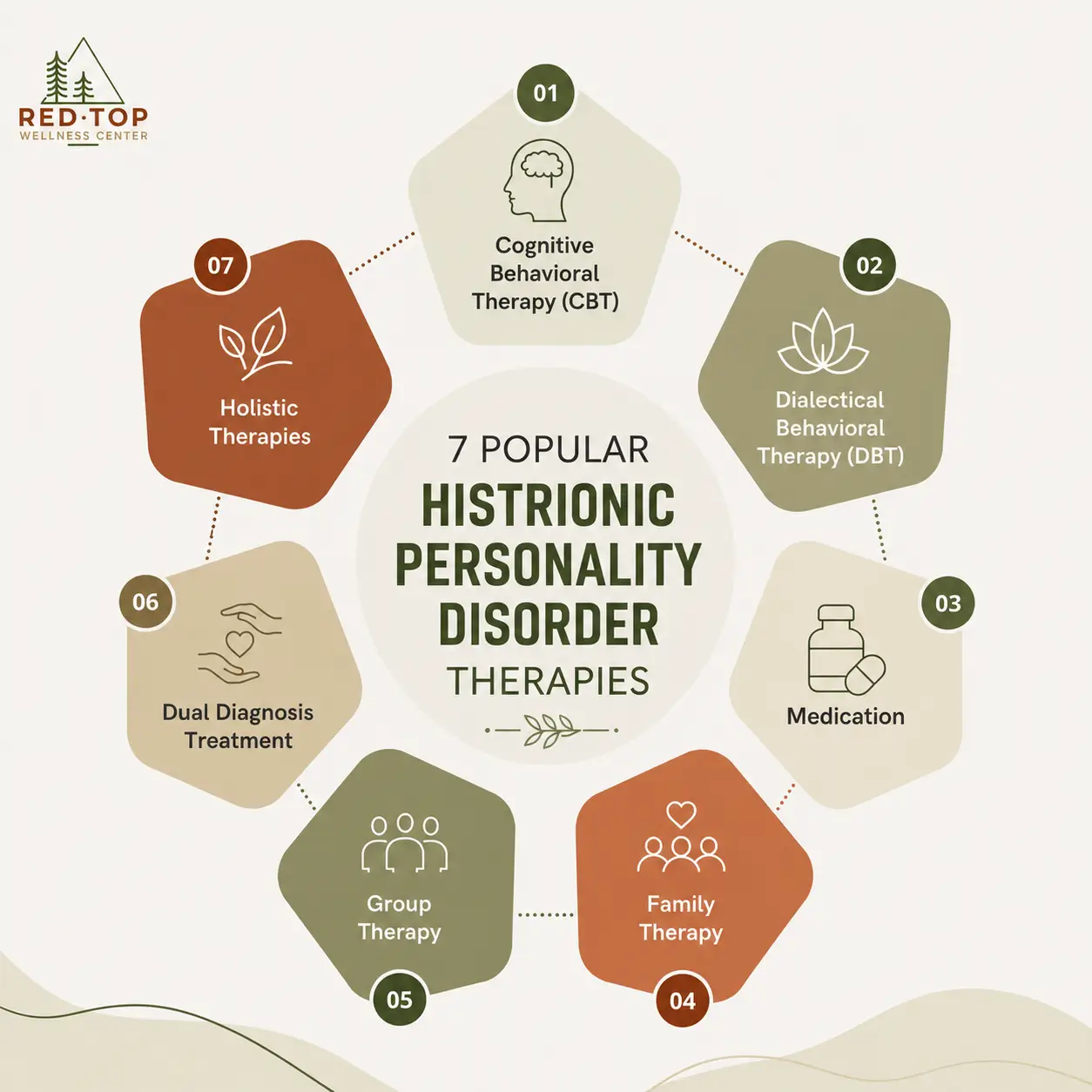
7 Popular Histrionic Personality Disorder Therapies
Although psychotherapy is often cited as most effective, there’s no single therapy for histrionic personality disorder that cures all symptoms. Each person’s experience with HPD is different, and a blend of approaches is important to ensure the treatment meets the individual’s unique needs.
A comprehensive plan for histrionic personality disorder treatment may include some, or all, of the following methods.
1. Cognitive Behavioral Therapy (CBT)
Cognitive behavioral therapy (CBT) is a psychotherapy, or talk therapy, that targets the specific thoughts and beliefs that drive histrionic personality disorder. In CBT sessions, your therapist will help you identify these thoughts and consider how they affect your emotions and behaviors.
In practice, CBT can help correct the thought processes associated with histrionic personality disorder by encouraging participants to:
- Track specific moments of emotional intensity or attention-seeking behavior to identify the belief that triggered them
- Challenge exaggerated beliefs about self-worth and approval
- Replace those beliefs with more accurate, flexible ones
- Practice triggering situations and evaluate whether the feared outcome actually happens
- Build a pause between an emotional trigger and a dramatic or attention-seeking reaction
- Replace indirect or exaggerated ways of expressing needs with direct requests
2. Dialectical Behavioral Therapy (DBT)
Dialectical behavioral therapy (DBT) is a form of CBT that was originally developed for borderline personality disorder. However, its skills translate well to other conditions involving emotional regulation and impulsive behaviors, making it an effective therapy for histrionic personality disorder.
DBT is typically delivered through a combination of individual therapy and skills-based group sessions, organized around four core modules:
- Mindfulness: Learning to observe emotions and urges without immediately acting on them
- Distress tolerance: Building the capacity to sit with uncomfortable emotions, like feeling overlooked or unimportant, without escalating to crisis-level behavior
- Emotion regulation: Identifying and naming emotions accurately, understanding what triggers rapid emotional shifts, and developing strategies to reduce their intensity
- Interpersonal effectiveness: Practicing how to ask for what you need, set boundaries, and maintain self-respect in relationships
3. Medication
There’s no medication that treats HPD directly, since it’s a personality disorder rather than a chemical imbalance. However, medication can be helpful for managing symptoms of co-occurring conditions, like depression or anxiety, which frequently accompany HPD.
In a residential treatment program, clinical staff and your primary therapist will work together to set and monitor a medication regimen that works best for you, if needed at all. Over time, they may adjust your regimen based on any present side effects, your responsiveness to the medication, and other factors influencing your recovery progress.
4. Family Therapy
In addition to affecting the person diagnosed with the condition, histrionic personality disorder affects everyone close to them. Partners, parents, siblings, and children often absorb the emotional volatility, the constant need for reassurance, and the strain of relationships caused by HPD. That’s why family involvement is considered an important part of comprehensive HPD care, particularly within a residential treatment setting.
In residential treatment, family therapy sessions typically serve a few distinct purposes:
- Education: Helping loved ones understand HPD as a clinical condition rather than a set of intentional behaviors, which reduces blame and resentment on both sides
- Communication skills: Teaching families how to respond to emotional intensity calmly and consistently, rather than over-accommodating or pulling away in frustration
- Boundary setting: Giving families concrete tools for setting and holding boundaries in a way that’s firm but not punishing
- Repairing trust: Working through specific relationship issues that HPD symptoms may have caused, in a structured and supported setting
- Discharge planning: Preparing the whole family for what the transition home will look like, including how to reinforce the skills the individual has been practicing in treatment
If someone you love has been diagnosed with histrionic personality disorder, be prepared to play an active role in their recovery and start responding in ways that support their progress. For example, practice identifying the need behind their attention-seeking behaviors, and respond to it with reassurance. Balance your responses with appropriate boundaries to avoid reinforcing negative behaviors.
The most helpful thing you can do for a loved one experiencing histrionic personality disorder is encourage them to seek treatment. Your loved one may not see the issue, or they may be hesitant to pursue professional help, and they’re more likely to engage with therapy when it feels like their own choice. Expressing concern and offering support tends to resonate better than trying to force them to consider residential care.
5. Group Therapy
Group therapy sessions are often surprisingly effective for HPD, because they give people direct, real-time feedback about how their interpersonal style affects others. In these sessions, people experiencing HPD will have the opportunity to practice the skills they’ve learned in one-on-one therapy by engaging with peers who are facing similar challenges.
This environment can also help address the tendency to seek approval by creating a safe space to practice more grounded ways of connecting. When an individual feels accepted by peers in group therapy, they’ll automatically have the reassurance they need to mitigate thoughts driven by histrionic personality disorder.
6. Dual Diagnosis Treatment
HPD frequently shows up alongside other conditions, including depression, anxiety, PTSD, and substance use disorders. A dual diagnosis can make therapy harder to engage in if left untreated, so histrionic personality disorder therapies must account for co-occurring conditions.
Dual diagnosis treatment addresses the personality disorder and any co-occurring mental health or substance use condition as one connected problem. This typically involves:
- A coordinated treatment plan that integrates individual therapy, group therapy, and medication management (when appropriate) around both conditions at once
- Evidence-based approaches like CBT, DBT, and acceptance and commitment therapy (ACT)
- Ongoing clinical monitoring, since symptoms of one condition can intensify or mask symptoms of the other
7. Holistic Therapies
While traditional treatments are valuable components of a comprehensive care plan, therapy for histrionic personality disorder doesn’t stop at traditional approaches. Holistic therapies provide alternative techniques for building emotional regulation, such as:
- Wellness-focused modalities: Practices like light-based or sound-based relaxation therapies, which support mood regulation and stress reduction as a complement to core psychotherapy
- Experiential and art therapy: Using creative expression to process emotions in a lower-pressure, non-verbal format, which can help individuals notice feelings they might otherwise ignore in conversation
- Recreational therapy: Relaxing activities that appeal to an individual’s interests and comfort level, such as participating in outdoor games, playing musical instruments, or even playing a game of ping pong
- Mindfulness and body-based practices: Techniques that help ground individuals in the present moment and build tolerance for sitting with emotion
Holistic therapies aren’t a replacement for evidence-based psychotherapy, but they add another layer of support that can be helpful for a well-rounded recovery experience.
How to Know Whether Therapy for Histrionic Personality Disorder is Working
Because HPD involves long-standing personality patterns rather than a discrete symptom like a panic attack, progress tends to be gradual and sometimes hard to notice day-to-day. Here’s what meaningful change typically looks like over time:
- Early progress often shows up as an insight or increase in self-awareness. You may start noticing HPD thought patterns as they happen, such as, “I just exaggerated that story to seem more interesting.”
- Mid-stage progress usually involves small behavioral shifts. You may pause before reacting emotionally, tolerate a conversation where you aren’t the focus, or communicate a need directly instead of through a dramatic gesture.
- Longer-term progress involves a more durable sense of identity. You’ll become less dependent on other people’s attention or approval, and you may see reduced HPD symptoms overall. For example, you may feel less exhausted, notice your relationships becoming more stable, and find that your emotional reactions are more proportional to what’s actually happening.
Histrionic Personality Disorder Treatment at Red Top Wellness Center
At Red Top Wellness Center, we offer residential histrionic personality disorder treatment built around comprehensive and personalized care plans. For every person who walks through our doors, we start with a comprehensive clinical assessment that evaluates every aspect of your experience with HPD. From there, we build a personalized treatment track, which may include:
- Cognitive behavioral therapy (CBT)
- Dialectical behavioral therapy (DBT)
- Medication management
- Dual diagnosis treatment
- Family involvement
- Group therapy sessions
- Holistic approaches
- 24/7 clinical support
Our team will also work closely with you and your family to plan the best way to move forward after leaving our facility, so the progress you make in residential treatment has the best possible chance of holding up in everyday life. If you’re ready to learn more about our approach to therapy for histrionic personality disorder, call our team. We’re here to answer any questions you may have about our program, help you understand your insurance coverage, and take the first step toward healing.
The Bottom Line
Histrionic personality disorder can make life feel like a constant performance, which is exhausting for the person experiencing it and confusing for those around them. But it is treatable. The right blend of therapy for histrionic personality disorder can help you or a loved one build healthier relationships and tear down the false belief that attention is necessary to feel worthwhile.
If you’re wondering which histrionic personality disorder therapies will be most effective for yourself or someone you’re close to, the best thing you can do is start the conversation with a mental health professional. Call Red Top Wellness Center today, and let our team guide you through the options that are available.