Despite being one of the most frequently diagnosed psychiatric conditions, bipolar disorder can be difficult to pinpoint. Its well-known symptoms, like mood swings, can be attributed to other health factors, unrelated to the condition. It can also mimic other diagnoses, like borderline personality disorder (BPD).
To make matters more complicated, bipolar disorder includes several distinct diagnoses. The two most common, bipolar 1 and bipolar 2, share many features, but understanding their differences is the key to making sense of the diagnosis.
This article compares bipolar 1 vs. 2, including their symptoms, treatment, and a few common misconceptions about each type.
Bipolar 1 vs. Bipolar 2, By Definition
Bipolar 1 and 2 are separate diagnoses within the broader group of bipolar disorder presentations. That group also includes cyclothymic disorder, which is a pattern of hypomanic and depressive symptoms that lasts at least two years without ever reaching full episode criteria. Other specified and unspecified bipolar disorders also exist.
What is Bipolar 1?
Bipolar 1 disorder requires at least one manic episode. The episode lasts at least seven days, or any length of time if it’s severe enough to require hospitalization.
Signs of a manic episode may include:
- Elevated, expansive, or irritable mood
- A sharply reduced need for sleep
- Rapid, pressured speech and racing thoughts
- Grandiose beliefs or inflated self-esteem
- Impulsive, high-risk behavior, such as major spending or reckless driving
- Psychosis, including delusions or hallucinations
Most people experiencing bipolar 1 also have depressive episodes, though depression isn’t required for the diagnosis. According to NIMH, depressive episodes typically last at least two weeks, and that psychotic symptoms during severe episodes tend to match the person’s extreme mood.
What is Bipolar 2?
The requirements for bipolar 2 disorder include:
- At least one hypomanic episode lasting four days or more. Hypomania involves the same kinds of symptoms as mania, such as elevated mood, extra energy, and less need for sleep, in a milder form. Others can usually notice the change, but it doesn’t cause severe impairment and never includes psychosis.
- At least one major depressive episode lasting two weeks or more. Depression is often the most prominent part of bipolar 2. In fact, research shows that people experiencing bipolar 2 spend far more time (80% of the time “ill”) in depressive episodes than in hypomanic ones. That’s also why bipolar 2 is often misdiagnosed as major depressive disorder (MDD).
Someone diagnosed with bipolar 2 has never experienced a full manic episode.
Similarities in Bipolar 1 and 2
Shared Symptoms
While bipolar 1 and 2 are differentiated by their presentation of symptoms, there can be similarities in each type. For example, although psychosis is a symptom of bipolar 1, it can also be present in bipolar 2 during depressive episodes.
Both types of bipolar disorder can include episodes with mixed features, otherwise known as mixed episodes. During these episodes, a person may experience symptoms of mania (or hypomania) and depression at the same time.
Causes
Both bipolar 1 and 2 appear to develop from a combination of factors. Studies have shown that there’s an element of heritability in developing bipolar disorder, and having a parent or sibling who experiences it raises your risk.
Other contributing factors include:
- Differences in brain structure and function
- Major stress or traumatic life events
- Disrupted sleep patterns
- Alcohol and drug use
Diagnosis
A psychiatrist or other qualified clinician makes the diagnosis through a detailed interview about your symptoms, history, and family background. Input from people close to you can help, since they may remember hypomanic periods you don’t.
The evaluation often includes:
- A review of past mood episodes and how long each one lasted
- Questions about sleep, energy, and behavior during high periods
- Screening questionnaires, such as the Mood Disorder Questionnaire
- Medical tests to rule out thyroid problems, medication effects, or substance use
- Mood tracking over several weeks, when the picture isn’t clear
Getting to an accurate diagnosis often takes time. One study found that there was an average delay of over six years between the first contact and a bipolar diagnosis.
Key Differences Between Bipolar 1 vs. 2
The primary difference between bipolar 1 and 2 is the type of episode presented. Bipolar 1 requires at least one full manic episode. Bipolar 2 requires at least one hypomanic episode and at least one major depressive episode, with no history of mania.
However, the differences between the two types go beyond diagnostic criteria. Long-term follow-up research shows the two conditions also differ in how much time is spent depressed, how often moods cycle, and how likely hospitalization becomes. We’ve broken down the biggest differences below.
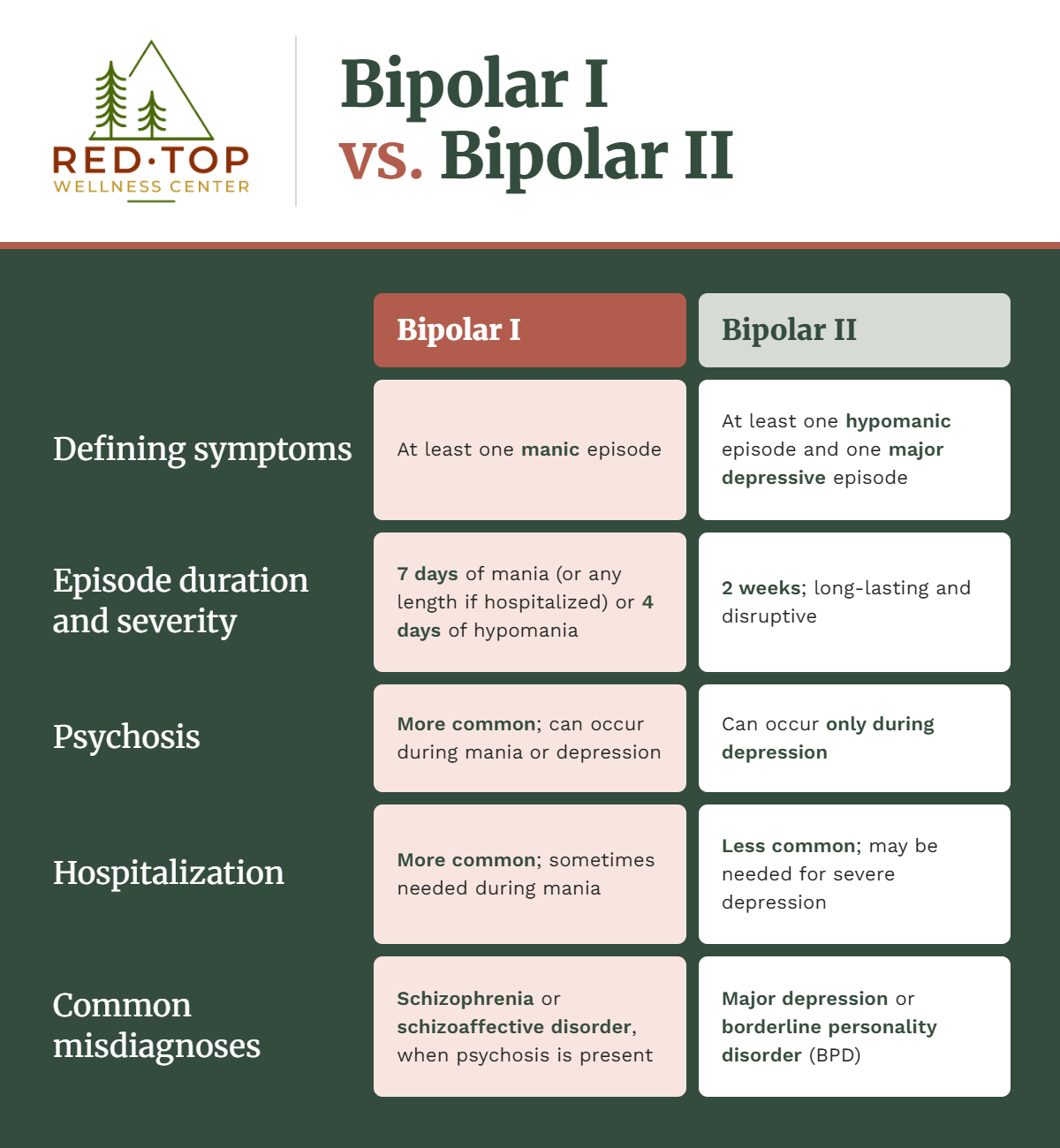
Defining Symptoms
As we’ve mentioned, the exact bipolar disorder diagnosis you receive depends on the nature of the episodes you experience. According to the American Psychiatric Association, each episode displays different symptoms.
A manic episode involves:
- Decreased need for sleep
- Racing thoughts
- Fast speech
- Impulsive behaviors
- Heightened activity
A hypomanic episode involves the symptoms listed above, although they may be less severe.
A depressive episode involves:
- Feelings of worthlessness
- Fatigue and changes in sleep patterns
- Changes in appetite
- Restlessness
- Slowed speech or movement
- Difficulty concentrating
- Frequent thoughts of death or suicide
Bipolar 1 is diagnosed when a person experiences a manic episode. Bipolar 2 requires at least one major depressive episode and at least one hypomanic episode. This diagnosis can also change if your symptoms do. For example, if you’re diagnosed with bipolar 2 and later experience a manic episode, a clinician may change your diagnosis to bipolar 1.
Episode Duration and Severity
An official diagnosis assigns a minimum duration to each episode type:
- Manic episode: At least seven consecutive days, with symptoms present most of the day nearly every day.
- The exception is hospitalization. If symptoms are severe enough to require hospital care, it’s considered a manic episode regardless of length.
- Hypomanic episode: At least four consecutive days
- Major depressive episode: At least two weeks, in either type
Another difference between bipolar 1 and 2 is the severity of these episodes. Hypomanic episodes are less intense than mania, but depressive episodes in bipolar 2 can be frequent, long-lasting, and deeply disruptive.
Psychosis
Psychosis is a state of experiencing hallucinations, delusions, or disorganized thinking. It can occur in both bipolar 1 and 2, but it looks different in each:
- Bipolar 1: Psychosis may occur during mania or during depression.
- Bipolar 2: Psychosis occurs only during depression, because psychosis during an elevated episode would make that episode manic by definition.
Hospitalization
Hospitalization is far more common in bipolar 1, because bipolar 1 more often produces a crisis. In contrast, bipolar 2 typically produces long-lasting symptoms that don’t peak or require emergency intervention.
One study found that hospitalization is more than five times as common in bipolar 1, because it’s predominantly needed for manic or psychotic episodes or suicidal risk.
Common Misdiagnoses
Bipolar 1 is frequently confused with schizophrenia or schizoaffective disorder, particularly when psychosis is the first symptom. The distinguishing question is whether the psychotic symptoms occur only alongside mood episodes or persist independently of them.
Bipolar 2 is most often confused with major depressive disorder or borderline personality disorder (BPD). The distinguishing factor among these conditions is typically the duration or the trigger of symptoms. Mood shifts in BPD usually last for a few hours and are typically triggered by something in the environment. Bipolar mood episodes, in contrast, last longer and occur without an external cause.
The two also co-occur. That review cites a meta-analysis finding borderline personality disorder in 21% of patients diagnosed with bipolar disorder, so the question is often which conditions are present rather than which one is correct.
Treatment for Bipolar 1 vs. 2
Treatment for both types of bipolar disorder incorporates a combination of medication and therapy, with the main difference depending on the symptoms that cause the most disruption.
The exact approach used depends on the unique needs and experiences of the person receiving care. In general, however, treatment for bipolar 1 focuses on controlling manic episodes and preventing new ones, while treatment for bipolar 2 targets depression.
Medication
Medication is usually the primary treatment method for both bipolar 1 and 2. Mood stabilizers, such as lithium and certain antipsychotic medications, are popularly used to maintain stability in bipolar 1. For bipolar 2, mood stabilizers are commonly prescribed to help prevent depressive episodes.
Mayo Clinic offers the following list of medication types used to treat bipolar 1 and 2:
- Mood stabilizers: Usually part of bipolar 1 and bipolar 2 treatment to help control episodes of mania or hypomania
- Examples: lithium (Lithobid), valproic acid, divalproex (Depakote), carbamazepine (Tegretol, Equetro, etc.) and lamotrigine (Lamictal)
- Antipsychotics: Given alone or along with a mood stabilizer
- Examples: olanzapine (Zyprexa), risperidone (Risperdal), quetiapine (Seroquel), aripiprazole (Abilify), and ziprasidone (Geodon)
- Antidepressants: Prescribed to help manage depression and anxiety.
- Bipolar 1: Given with a mood stabilizer or an antipsychotic, because some can trigger mania
- Bipolar 2: May be given alone
- Antidepressant-antipsychotic: Specifically, the medicine Symbyax targets depressive symptoms in bipolar 1.
Psychotherapy
While medication is the foundation of treatment for both bipolar 1 and 2, therapy does work that medication can’t. Talk therapy (also known as psychotherapy) teaches you to manage stress and build routines that support stability. Certain psychotherapies have shown promising evidence in bipolar disorder treatment, including:
- Cognitive behavioral therapy (CBT): Addresses the thought patterns that feed depression and helps you respond to early symptoms
- Dialectical behavior therapy (DBT): Builds skills for emotion regulation, distress tolerance, and impulse control
- Acceptance and commitment therapy (ACT): Teaches you to make room for difficult thoughts and feelings instead of fighting them
Residential Treatment for Bipolar 1 and 2
Many levels of professional treatment can be beneficial for managing symptoms of bipolar disorder. However, recurrent episodes or unsuccessful attempts at recovery through lower levels of care may signal that it’s time to consider residential treatment.
Residential treatment for bipolar disorder involves 24/7 support in a home-like setting, which many people find to be a comfortable compromise between a hospital stay and outpatient care. Residential programs allow your clinical team to observe your episode patterns over time, confirm the right diagnosis, and implement a treatment plan that supports long-term management.
At Red Top Wellness Center, our residential program treats all types of bipolar disorder in personalized care plans that combine:
- Evidence-based therapies, including CBT, DBT, and ACT
- Holistic therapies, such as biosound therapy, art therapy, and red light therapy
- Dual diagnosis treatment that addresses co-occurring mental health conditions or bipolar disorder and substance use together
Whether you’re experiencing bipolar 1 or bipolar 2, the right diagnosis and a consistent care plan can help you achieve long-term stability. Our team takes your recovery seriously and builds treatment around your specific symptoms and goals.
If you’re looking for residential mental health treatment in Cartersville, Georgia, or the greater Atlanta area, Red Top Wellness Center may be the right fit. Verify your insurance or call our team at (470) 227-7574 to learn more about our program.

Alden Rodgers writes mental health content for Red Top Wellness Center. She studied journalism at the University of Georgia and has spent the past three years writing content professionally for the healthcare industry. Alden works with Red Top Wellness Center’s clinical team to verify each article’s accuracy before publication.
This article is intended to provide general information, not medical advice. Reading it does not create a provider-patient relationship with Red Top Wellness Center. Its clinical information was accurate as of the publish date shown above. If you are in immediate danger, call 911, or call or text 988 to reach the Suicide and Crisis Lifeline. To learn more about our content creation, review, and publication process, see our editorial policy.